
Discover how AI is transforming security systems in Southeast Asia with benchmark data, risk insights, and a practical deployment framework for security leaders.

Harnessing AI for Security Systems: Boost Protection and Efficiency

TL;DR:
- AI enhances security speed and accuracy, outperforming humans in threat detection and response.
- Deployment risks include false positives, adversarial attacks, and regulatory compliance challenges.
- Success requires regional expertise, hybrid human-AI teams, and ongoing auditing and retraining.
AI is no longer a future promise for security leaders in Southeast Asia — it is a measurable operational reality. CAI framework benchmarks show AI outperforming human security analysts by 11x in speed on standard tasks, with some specialized functions reaching 3,600x faster throughput. Yet many security managers and directors still struggle with a fundamental question: how do you extract genuine value from AI without exposing your operations to new, unacceptable risks? This guide cuts through the noise. We cover the core mechanics of AI-driven security, hard benchmark data, the dual-use dilemma, and a practical deployment framework built for Southeast Asian environments.
Table of Contents
- How AI transforms modern security systems
- AI benchmarks: Speed, accuracy, and use cases
- Risks, challenges, and the dual-use dilemma
- Best practices for deploying AI in Southeast Asian security operations
- Why effective AI security requires more than just technology
- Explore advanced AI solutions for your security needs
- Frequently asked questions
Key Takeaways
| Point | Details |
|---|---|
| AI boosts security efficiency | AI-driven systems automate threat detection and response, enabling faster and more accurate security management. |
| Risks require oversight | False positives, adversarial use, and lack of transparency mean AI solutions must be paired with human judgment and governance. |
| Hybrid strategies work best | Combining AI with trained human teams, local compliance, and tailored solutions delivers the most resilient outcomes. |
| Regional challenges matter | Southeast Asian leaders must tackle talent, integration, and regulatory barriers unique to their markets for AI adoption to succeed. |
How AI transforms modern security systems
With this context, let's explore the fundamental shifts AI brings to modern security systems.
Traditional security operations run on a simple model: detect, alert, respond. The problem is that each step takes time, and attackers exploit every second of delay. AI fundamentally changes this sequence by collapsing detection and response into a near-simultaneous operation. Automated systems can analyze thousands of event streams in parallel, flag anomalies, and trigger responses before a human analyst has even opened an alert queue.
This is precisely why AI shifts security from a reactive posture to a proactive one, using automation and predictive modeling to stay ahead of threats rather than chasing them. For security directors in Southeast Asia managing critical infrastructure, ports, data centers, or smart city assets, this shift has direct operational value.
AI's impact spans both digital and physical security domains:
- Cyber domain: Behavioral analytics, intrusion detection, and automated threat hunting continuously monitor network traffic and user behavior.
- Physical domain: Computer vision, access control intelligence, and advanced sensing in security environments enable real-time perimeter monitoring without constant manual oversight.
- Cross-domain correlation: AI platforms can link a suspicious badge-swipe event to a simultaneous network anomaly, creating a unified threat picture no human team could assemble that quickly.
The adoption curve in Southeast Asia is accelerating. Governments in Singapore, Malaysia, and the Philippines are investing in AI-powered infrastructure protection, and private sector security operations are following. Intelligent sensing technologies are increasingly central to this buildout, powering everything from smart access gates to environmental anomaly detection.
"AI augments what human teams can observe and respond to, but governance structures and human oversight determine whether that augmentation translates into real security uplift or just additional noise."
Pro Tip: Before deploying any AI security layer, map your existing alert fatigue problem. If your team is already overwhelmed by manual alerts, adding AI without proper tuning will generate more noise, not less. Start with exception-based monitoring configurations.
The essential role of sensors in this ecosystem cannot be understated. High-precision sensing hardware feeds the AI models that drive automated decisions, meaning the quality of your sensor infrastructure directly determines the quality of AI outputs.

AI benchmarks: Speed, accuracy, and use cases
Understanding these core shifts, let's evaluate how AI actually performs against traditional security solutions.
Benchmark data is where AI's value proposition becomes undeniable. CAI framework performance data establishes that AI completes security tasks 11x faster on standard benchmarks, and up to 3,600x faster on specialized, high-volume detection tasks. The Sola agent achieves 80% accuracy on Identity Security Posture Management (ISPM), while prompt injection detection models reach an F1 score of 0.857, a strong result for a notoriously difficult problem.
| Metric | Human teams | AI systems |
|---|---|---|
| Threat detection speed | Minutes to hours | Milliseconds to seconds |
| 24/7 continuous monitoring | Requires shift rotations | Uninterrupted |
| ISPM accuracy (Sola agent) | ~60% (estimated) | 80% |
| Prompt injection detection F1 | N/A | 0.857 |
| Task speed (specialized) | Baseline | Up to 3,600x faster |
In Southeast Asia, real-world deployments are validating these numbers. Southeast Asia AI adoption data shows growing use of AI in identity verification, access control, and prompt injection detection across the region's financial and government sectors. Physical security teams are deploying computer vision models trained on local environmental conditions, producing significantly fewer false positives than generic, off-the-shelf systems.
Different AI models excel in specific functions. Key use cases worth tracking:
- Anomaly detection: Unsupervised learning models excel at flagging deviations in access patterns or network behavior.
- Video analytics: Vision Language Models (VLMs) enable nuanced scene understanding beyond simple motion detection.
- Threat intelligence correlation: Large language models (LLMs) can parse and connect threat reports at a speed no analyst team can match.
- Predictive maintenance: AI monitoring emerging security technology sensors predicts hardware failures before they create security gaps.
One critical caution: managing AI-enabled security teams effectively means recognizing that 41% of organizations have reported AI inaccuracy incidents. AI never blinks, but it can confidently make the wrong call at scale. Human validation checkpoints remain non-negotiable, especially for high-stakes access or incident escalation decisions.
Risks, challenges, and the dual-use dilemma
While benchmarks are promising, leaders must weigh both benefits and potential pitfalls.
AI's power cuts both ways. The same capabilities that make AI an effective defender also make it a potent offensive tool. Deepfake-enabled social engineering, polymorphic malware that rewrites itself to evade detection, and AI-generated phishing content are already appearing in regional threat landscapes.
Only 9% of SEA organizations feel confident in their ability to defend against AI-enabled threats, and 41% have experienced AI inaccuracy in their deployments. Meanwhile, the Asia-Pacific region accounts for 34% of global security incidents, with over 60,000 prompt injection attacks recorded, and a success rate exceeding 60% when targeting AI-driven systems.
Benefits vs. risks comparison:
| Dimension | Benefit | Risk |
|---|---|---|
| Speed | Real-time detection and response | Rapid propagation of AI-driven attacks |
| Scale | Monitors thousands of endpoints simultaneously | False positives at scale overwhelm teams |
| Accuracy | High F1 scores on specific tasks | 88% of AI models are non-explainable |
| Automation | Reduces manual workload | Removes human judgment from critical decisions |
| Adaptability | Learns from new threat patterns | Model drift degrades performance over time |
Top risks to manage:
- False positives and false negatives: AI models trained on incomplete or biased datasets produce unreliable outputs that erode operator trust over time.
- Adversarial attacks: Attackers deliberately manipulate input data (images, text, sensor feeds) to fool AI models into making incorrect decisions.
- Non-explainability: 88% of AI models operate as black boxes, making audits and regulatory compliance extremely difficult for compliance-focused security systems.
- Regulatory misalignment: Southeast Asia's patchwork of data privacy laws (PDPA in Thailand, DPA in the Philippines, PDPC in Singapore) creates compliance complexity that vendor-agnostic AI tools often ignore.
- Model drift: AI performance degrades as threat patterns evolve, requiring active retraining schedules that many organizations neglect.
Pro Tip: When evaluating AI vendors, always ask for explainability documentation and request a demonstration of how the system behaves under adversarial inputs. Vendors who cannot answer these questions confidently are not ready for your operational environment.
Understanding key compliance frameworks specific to Southeast Asia is not optional. It is a prerequisite to deploying any AI system that touches personally identifiable data, biometric access logs, or cross-border data flows.
Best practices for deploying AI in Southeast Asian security operations
Having weighed risks, let's focus on practical steps for Southeast Asian security directors to maximize AI benefits.
Deployment success depends on structured preparation, not just technology selection. Regional security AI collaboration findings confirm that leaders who pursue hybrid AI-human setups, enforce data sovereignty checks, and invest in local upskilling consistently outperform those who deploy AI as a plug-and-play replacement for human judgment.
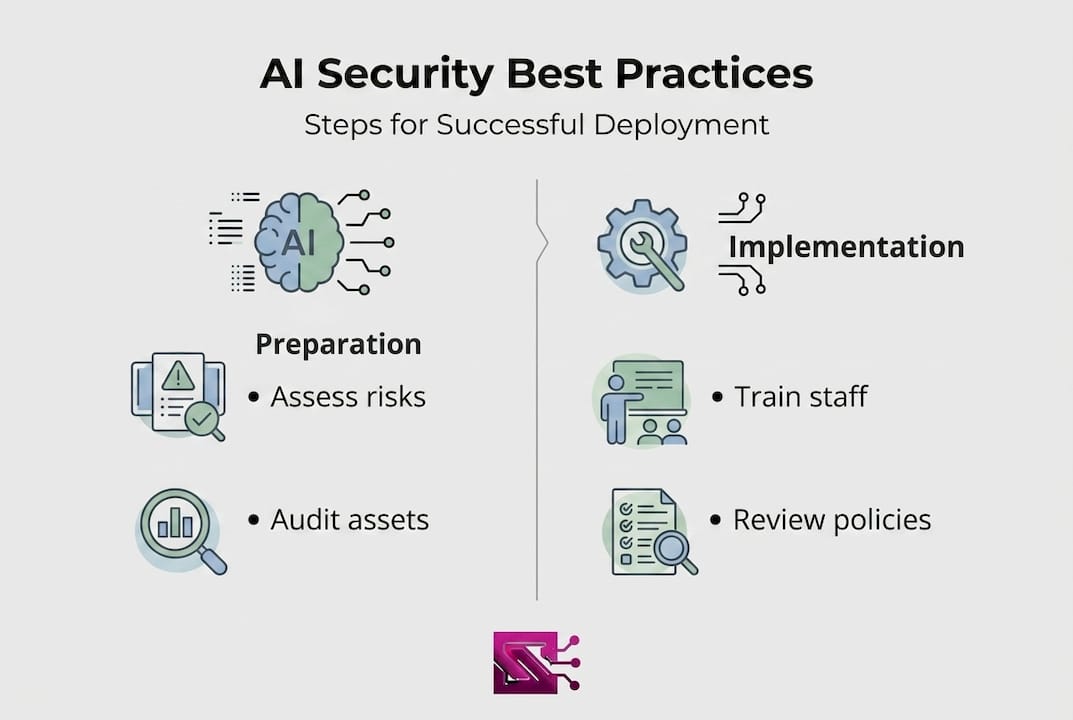
Five-step deployment checklist for Southeast Asian security operations:
- Assess operational readiness: Audit existing sensor infrastructure, data pipelines, and alert management workflows before selecting any AI platform. Gaps here will amplify, not hide, after AI deployment.
- Define success metrics: Establish clear KPIs: mean time to detect (MTTD), false positive rate, and system uptime. Benchmark against your current baseline before go-live.
- Select vendors with regional expertise: Prioritize vendors who understand local regulatory requirements and can demonstrate optimizing security workflows within your specific operational context, whether it is a port in Manila, a data center in Kuala Lumpur, or a government facility in Singapore.
- Build hybrid AI-human teams: Assign human analysts to validate AI-flagged incidents above a defined risk threshold. This hybrid model preserves AI speed while retaining human judgment where it matters most.
- Schedule retraining and audits: Establish a quarterly model review cycle. AI systems that are not regularly retrained on fresh threat data will drift toward outdated threat profiles, creating false confidence.
Legacy system integration is a consistent pain point across Southeast Asia. Most organizations cannot rip and replace existing infrastructure. Tailored solutions that integrate with legacy access control systems and existing sensor networks deliver faster time to value than generic platforms requiring full infrastructure overhaul. Additionally, following physical security best practices ensures your foundational processes support, rather than conflict with, AI-driven enhancements.
A cybersecurity strategy with AI only delivers sustained value when governance frameworks are built in from day one, not retrofitted after a breach.
Why effective AI security requires more than just technology
Many organizations invest in AI expecting it to solve security problems automatically. This is the most expensive misconception in the industry. Technology sets the ceiling for what is possible; leadership, culture, and training determine how close you get to it.
We see this consistently across Southeast Asian deployments. Organizations that treat AI as a procurement decision rather than an organizational transformation end up with underutilized platforms and frustrated teams. Real, sustainable security uplift comes from aligning technology with people who understand both its capabilities and its limits.
Security culture and stakeholder buy-in are prerequisites, not afterthoughts. AI augments managerial judgment; it does not replace it. Security directors who treat AI as a co-pilot, rather than an autopilot, make better decisions faster. The organizations that get this right build tailored security strategies that evolve alongside both the threat landscape and the capabilities of their teams.
Explore advanced AI solutions for your security needs
For Southeast Asian leaders ready to elevate their security strategy, tailored expert support is available.
BeyondSensor delivers region-specific AI-driven security solutions designed for the operational realities of Southeast Asian environments, from Singapore's smart infrastructure to the Philippines' expanding critical asset base.
Whether you are a system integrator deploying AI-powered sensor networks, a security agency upgrading your monitoring capabilities, or an enterprise leader exploring the BeyondSecure platform, BeyondSensor provides the localized expertise, validated hardware-software integration, and compliance-ready frameworks your operations need. Our team is ready to help you move from AI exploration to AI execution with confidence.
Frequently asked questions
What are the main benefits of using AI in security systems?
AI delivers automation, real-time threat detection, and measurable efficiency gains, with benchmarks showing AI completing security tasks 11x to 3,600x faster than human teams while maintaining continuous 24/7 monitoring that shift-based teams cannot match.
What are the top risks with AI-powered security?
The biggest risks include false positives, adversarial attacks, and regulatory non-compliance. Prompt injection attacks succeed over 60% of the time against AI-driven systems, and most AI models operate as non-explainable black boxes that complicate audit and governance processes.
How can Southeast Asian security leaders address talent and integration gaps?
Prioritize regional training programs, structure hybrid AI-human oversight teams, and require vendors to demonstrate compliance with local data privacy regulations. Regional collaborations and thorough vendor assessment are consistently the most effective starting points.
Can AI completely replace human oversight in security operations?
No. Human governance remains essential for managing AI biases, adapting to novel threats, and maintaining regulatory compliance, especially in Southeast Asia's complex multi-jurisdiction environment.
Recommended
- Understanding advanced sensing: boost security and efficiency | News | BeyondSensor
- Top intelligent sensing technologies to boost facility security | News | BeyondSensor
- Why tailored security solutions outperform generic systems | News | BeyondSensor
- Explore emerging security technology trends for 2026 | News | BeyondSensor
Read More Articles
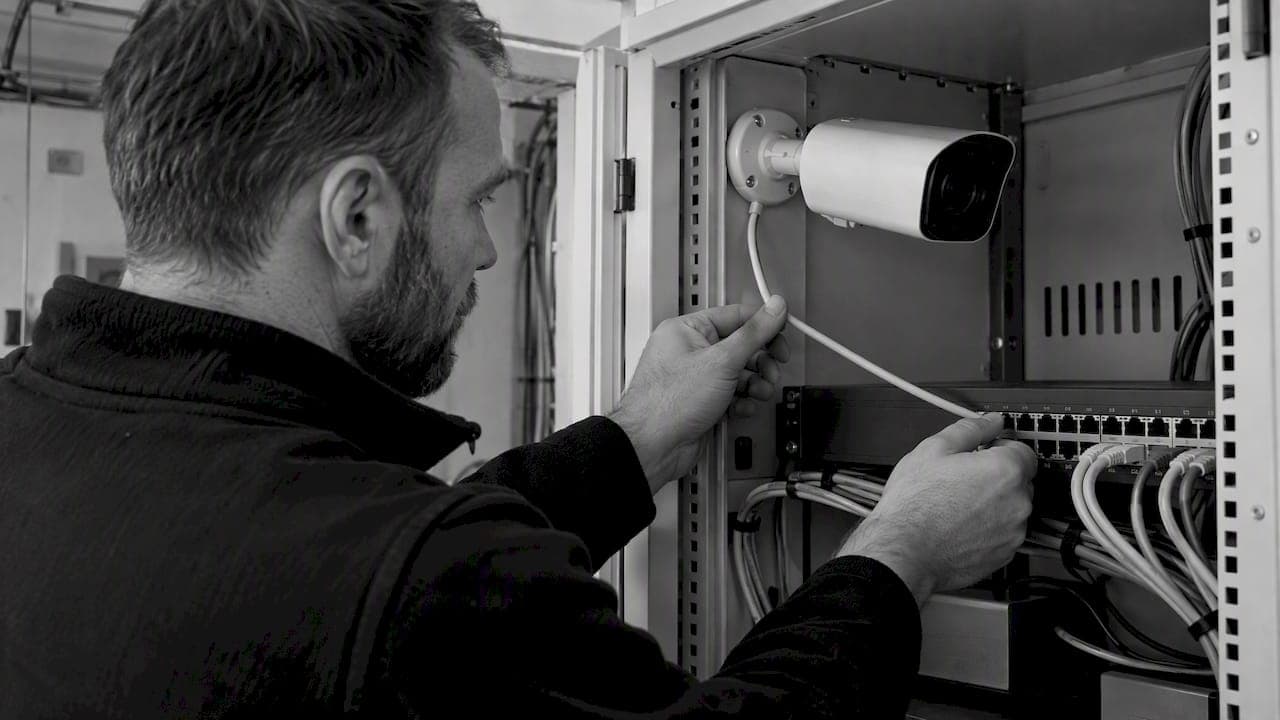
RTSP Security Risks: Integrators Must Block Exposed Ports 554 and 8554
See how integrators can reduce RTSP security risks: close exposed ports 554 and 8554, secure camera access, and verify each deployment with practical checks.

Require MAEpp and X Accuracy Before You Buy People Counting Systems
Verify people counting accuracy by demanding MAEpp, X Accuracy, and directional-bias reports. Validate on-site with at least 100 events per direction...
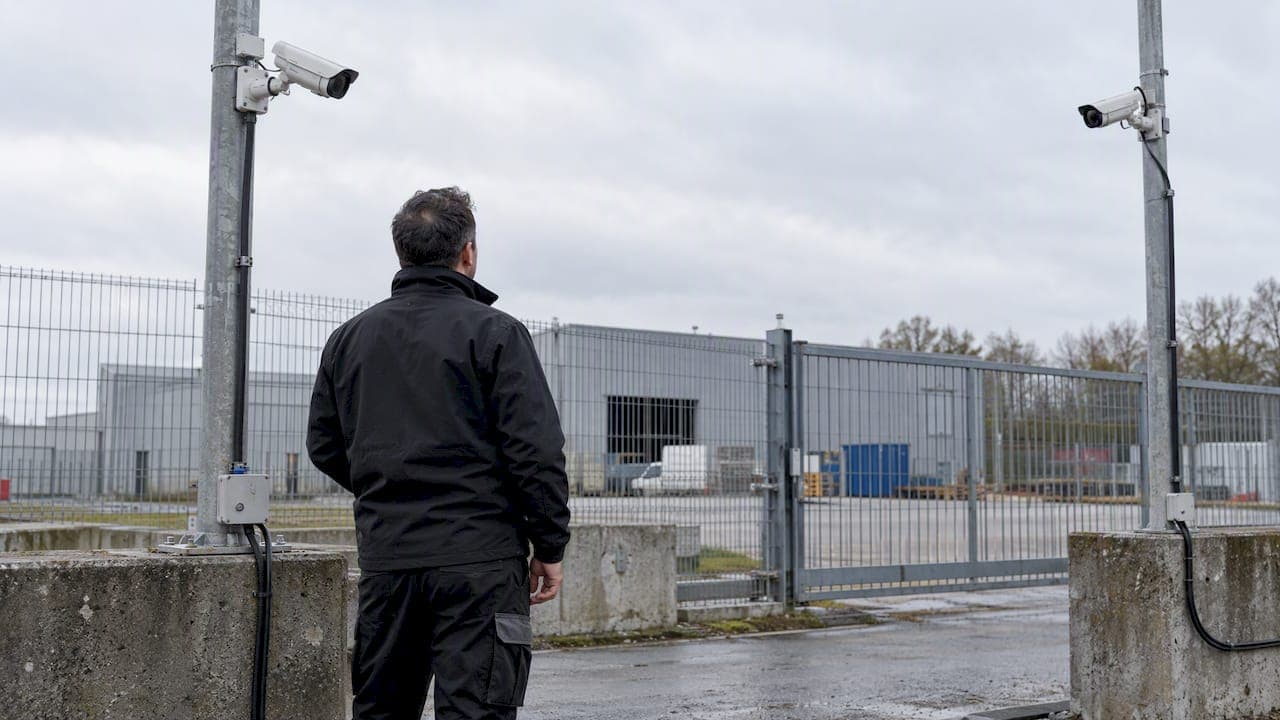
30–90 Day Pilot Validates Redundant Camera Networks for Engineers
Standards led, practical steps for engineers to deploy redundant camera networks: MRP, dual homing, and aggregation patterns, commissioning checks, and...
30 Day Pilot Proves Video Analytics Accuracy for Security Teams
Validate video analytics accuracy with scenario tests, camera tuning, transfer learning and a 30 day edge first pilot for security teams.
Let's Build YourSecurity Ecosystem.
Whether you're a System Integrator, Solution Provider, or an End-User looking for trusted advisory, our team is ready to help you navigate the BeyondSensor landscape.
Direct Advisory
Connect with our regional experts for tailored solutioning.