
Learn how to integrate disconnected physical security systems into a unified platform with this step-by-step guide for facility managers in Southeast Asia.

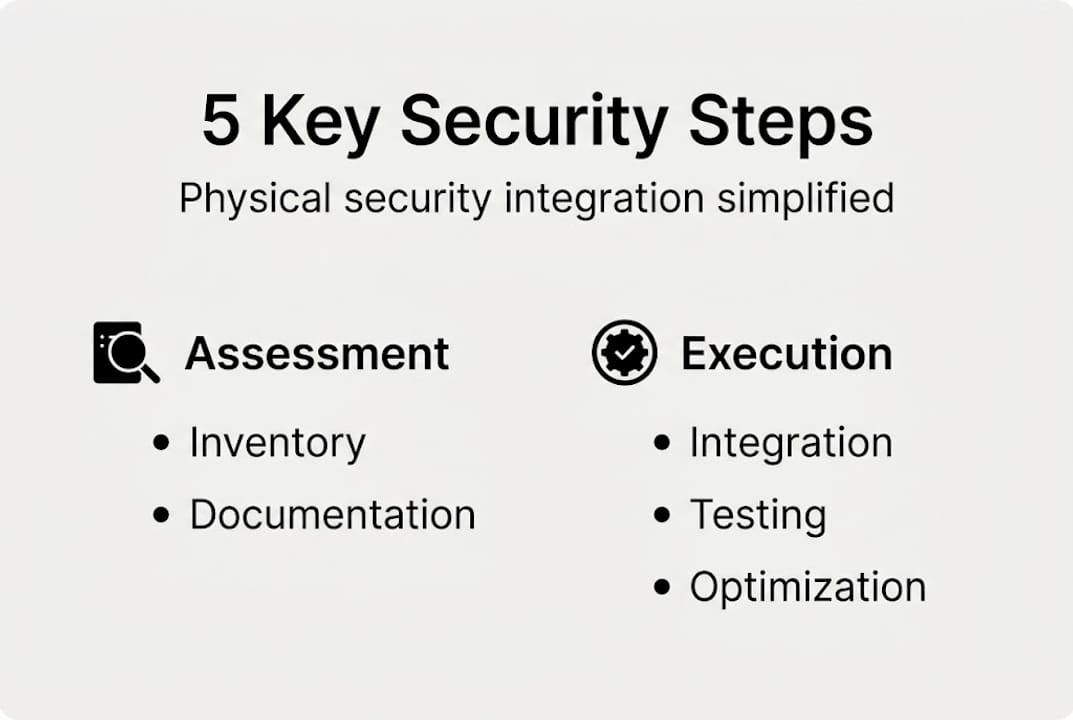
Streamline physical security integration: 5 key steps

TL;DR:
- Disconnected security systems hinder rapid response and comprehensive monitoring.
- A hybrid integration approach allows incremental upgrades while managing legacy devices.
- Proper assessment, tool selection, and staff training are crucial for successful security system integration.
Disconnected security systems are more than an inconvenience. When cameras, access controls, alarms, and environmental sensors operate in separate silos, your team loses precious response time and visibility exactly when it matters most. Real-time response and holistic monitoring become nearly impossible without a unified platform. This guide gives security directors and facility managers in Southeast Asia a practical, sequential roadmap for integrating physical security subsystems. You will move through assessment, tool selection, execution, and ongoing optimization with clear steps, practical comparisons, and actionable insights designed to improve both safety outcomes and operational efficiency.
Table of Contents
- Assessing your current security environment
- Selecting tools and platforms for integration
- Step-by-step integration process
- Troubleshooting and optimizing your solution
- Why a hybrid integration strategy is the future
- How BeyondSensor can accelerate your integration success
- Frequently asked questions
Key Takeaways
| Point | Details |
|---|---|
| Unified monitoring is essential | Combining all security subsystems into one platform streamlines operations and speeds up response. |
| Choose tools carefully | Evaluate PSIM options and integration models to fit your facility’s scale and legacy landscape. |
| Stepwise process, measurable results | Following a structured integration methodology reduces disruption and ensures compliance. |
| Troubleshooting drives long-term success | Addressing common integration challenges proactively leads to sustained performance and safety. |
| Hybrid expertise leads transformation | Developing dual skills in physical and cyber security will future-proof your organization. |
Assessing your current security environment
The starting point for any successful integration is knowing exactly what you have. Before you configure a single API or touch a network setting, you need a clear picture of every device, data flow, and protocol in your facility. This is not a one-afternoon task. For mid-sized facilities across Singapore, Malaysia, or the Philippines, a proper audit can take several days and surface surprising gaps.
Begin by building a full asset inventory. List every camera, alarm panel, access reader, intercom, sensor, and control station. For each device, record the manufacturer, firmware version, communication protocol, and whether it connects to your main network or runs in isolation. Asset inventory and network review are recognized initial steps in any SOC-level integration process, and skipping them creates compounding problems downstream.
Next, map your data flows. Trace how events travel from field devices to your monitoring station. Identify where data gets stored, who receives alerts, and how long records are retained. Pay close attention to legacy devices that use proprietary protocols or aging firmware with no update support.
Integration readiness checklist:
- Complete device inventory with protocol documentation
- Network topology map including VLANs and firewall rules
- List of systems that currently share data versus standalone units
- Identification of legacy devices with known compatibility limits
- Current SOP documentation for incident response
- Vendor contact list and support contract status
| Readiness Factor | Status Options |
|---|---|
| Device documentation complete | Yes / Partial / No |
| Network map current | Yes / Partial / No |
| Legacy devices identified | Yes / Partial / No |
| SOPs documented | Yes / Partial / No |
| Vendor support active | Yes / Partial / No |
Refer to physical security best practices for a deeper look at structuring a resilient baseline before integration begins.
Pro Tip: Photograph each physical device and tag it with a unique ID during your audit. This simple step saves hours during configuration and troubleshooting later in the project.
Selecting tools and platforms for integration
Once you understand your security landscape, the next task is choosing the right integration tools. The centerpiece of most enterprise-level deployments is a Physical Security Information Management platform, commonly called a PSIM. PSIM platforms aggregate data from multiple subsystems, correlate events, and present operators with a single management view. This dramatically reduces missed alerts and manual cross-referencing.
When evaluating PSIM or similar middleware solutions, assess the following criteria carefully:
- Open API support: Can the platform connect to your existing devices without custom development?
- Scalability: Does it support the number of devices and concurrent users your facility requires?
- Regional compliance: Does it meet data residency and privacy regulations relevant to your country?
- Vendor neutrality: Can it integrate devices from multiple manufacturers without forcing a single-brand ecosystem?
- Analytics and reporting: Does it include event correlation, automated workflows, and audit trails?
Beyond platform selection, you also need to choose your integration model. Three primary models apply to regional facilities:
| Model | Description | Best For |
|---|---|---|
| Siloed | Each subsystem operates independently | Small facilities with simple needs |
| Converged | All subsystems share a single unified platform | New builds with modern infrastructure |
| Hybrid | Core systems converge; legacy systems connected via adapters | Most existing mid-to-large facilities |
The hybrid model is the most practical choice for the majority of Southeast Asian facilities today. Most sites carry a mix of modern IP cameras, older analog systems, and access control hardware from different generations. Forcing full convergence overnight is expensive and disruptive. A hybrid approach lets you unify critical systems first while managing legacy components in parallel.

Explore how intelligent sensing technologies can extend the capability of your chosen PSIM platform. For workflow alignment during this phase, guidance on optimizing security workflows with advanced sensors offers useful context.
Step-by-step integration process
After selecting a platform and integration approach, you are ready to execute. The methodology below draws from the established PSIM framework, which defines six core steps from initial device data collection through to auditing completed actions. Each step builds on the previous one, so sequencing matters.
- Collect device data: Connect all in-scope devices to the PSIM or integration middleware. Configure communication protocols and confirm data is reaching the platform correctly.
- Normalize data formats: Different devices output events in different formats. Translate all inputs into a common data schema so the platform can process them uniformly.
- Define event correlation rules: Set rules that tell the system when to link multiple events into a single incident. For example, a door forced open plus a camera motion trigger should create one alert, not two separate notifications.
- Configure automated workflows: Assign response procedures to specific event types. When an access control violation occurs, the system should automatically notify the right team and log the incident without waiting for manual intervention.
- Update standard operating procedures (SOPs): Your staff needs updated procedures that reflect how incidents now flow through the integrated system. Old SOPs that reference siloed monitoring will create confusion.
- Conduct incident audit and verification: Run tabletop exercises and live drills to confirm the system responds as designed. Review audit logs after each test to identify gaps.
"Integration without updated SOPs is like installing a new engine in a car while leaving the old dashboard. Your team will not know how to drive it."
Compliance reporting is a critical output of this phase. Integrated systems make it significantly easier to generate access logs, camera footage records, and incident timelines for regulatory audits. Use the security checklist for infrastructure as a reference during verification. For deployment-specific guidance, review PSIM deployment best practices to avoid common configuration errors.
Troubleshooting and optimizing your solution
Once integration is operational, maintaining performance and resolving emerging issues becomes the ongoing focus. Four persistent challenges appear in almost every complex deployment: legacy system integration, vendor lock-in, alert volume overload, and skill gaps among operators. Addressing these proactively prevents performance erosion over time.
Legacy integration and alert overload are recognized as key edge cases that can destabilize even well-designed security operations centers. Mid-sized facilities commonly generate over 100,000 events per day, making manual review impossible without smart filtering.
Best practices for sustained performance:
- Protocol adapters for legacy devices: Where direct integration is not possible, deploy hardware or software adapters that translate proprietary outputs into formats your PSIM can read.
- Event filtering and prioritization: Configure your platform to suppress low-priority, repetitive events and escalate only actionable alerts to operator dashboards.
- Threshold-based alerting: Define normal operating parameters for each sensor type and alert only when thresholds are exceeded, not on every data point.
- Tiered vendor contracts: Negotiate support contracts that guarantee firmware updates and integration compatibility for at least five years to reduce lock-in risk.
- Regular system health reviews: Schedule quarterly audits of alert volumes, operator response times, and false positive rates to catch degradation early.
Staff training is equally critical and often underestimated. Operators transitioning from siloed monitoring to a unified console face a steep learning curve. Structured training programs, combined with clear escalation playbooks, significantly reduce errors during the first six months after go-live.
Pro Tip: Track your false positive rate monthly. If it climbs above 20%, your event correlation rules need immediate recalibration. High false positive rates are the leading driver of operator alert fatigue in converged environments.
For a detailed technical reference on sensor connectivity, the advanced sensor integration guide covers protocol-level troubleshooting. For broader performance metrics, operational efficiency in security provides a strong measurement framework.
Why a hybrid integration strategy is the future
Most integration guides will tell you to aim for full convergence as the gold standard. We disagree, at least as a near-term goal for most Southeast Asian facilities. The regional risk profile is changing fast. Geopolitical pressures, mixed-age infrastructure, and rapidly evolving threat vectors mean that rigid, fully converged systems can become brittle liabilities when the environment shifts.
Hybrid models offer something that full convergence does not: the ability to absorb change incrementally. You can upgrade one subsystem at a time, test new sensing technologies in isolation, and adopt emerging capabilities without rearchitecting your entire platform.
The deeper challenge is talent. Hybrid integration requires analysts who are skilled in both physical security and cybersecurity domains, and those profiles are genuinely rare in this region. Facilities that invest now in upskilling existing staff or hiring dual-skilled analysts will hold a measurable advantage in proactive threat detection within the next three years.
Physical and cyber threats are no longer separate conversations. An access control breach today may be the precursor to a network intrusion tomorrow. The facilities that bridge these domains, supported by the advantages of sensing solutions, will lead in both defense and operational intelligence.
How BeyondSensor can accelerate your integration success
With a long-term strategy in mind, choosing the right partner is key for sustained results.

BeyondSensor delivers AI-driven sensing platforms and integration tools purpose-built for complex facility environments across Singapore, Malaysia, the Philippines, and the broader Southeast Asian region. Our solutions support every stage of the process described in this guide, from initial assessment through ongoing optimization. Whether you are a security agency defining system requirements, a system integrator managing a multi-site deployment, or a facility owner seeking scalable, compliant infrastructure, BeyondSensor brings localized expertise, validated hardware-software stacks, and hands-on engineering support to every engagement.
Frequently asked questions
What is the role of PSIM in physical security integration?
PSIM platforms aggregate data from all physical security subsystems into a unified management view, enabling operators to correlate events and respond faster with fewer missed alerts.
How do you handle legacy devices during integration?
Assess each legacy device for protocol compatibility first, then use hardware or software adapters to bridge the gap. Legacy system integration challenges are common, and phased upgrades reduce operational disruption significantly.
What is alert fatigue and how can it be reduced?
Alert fatigue occurs when operators are overwhelmed by high event volumes, causing them to miss real threats. Facilities generating 100,000+ events/day must apply smart event correlation and priority-based filtering to keep operators focused and effective.
Is a hybrid physical-cyber security operations model practical?
Yes, but effectiveness depends on having analysts trained in both domains. Dual-skilled analysts are rare in Southeast Asia, making targeted upskilling programs a strategic priority for facilities adopting converged operations.
Recommended
Read More Articles
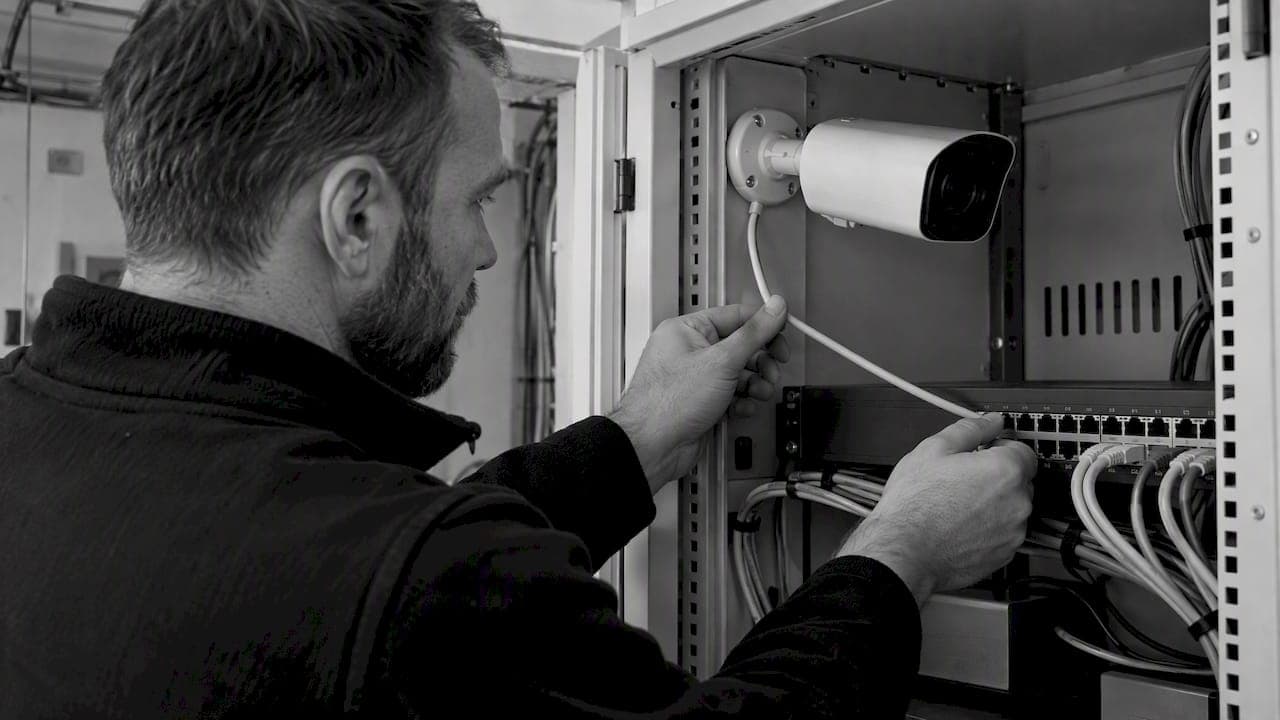
RTSP Security Risks: Integrators Must Block Exposed Ports 554 and 8554
See how integrators can reduce RTSP security risks: close exposed ports 554 and 8554, secure camera access, and verify each deployment with practical checks.

Require MAEpp and X Accuracy Before You Buy People Counting Systems
Verify people counting accuracy by demanding MAEpp, X Accuracy, and directional-bias reports. Validate on-site with at least 100 events per direction...
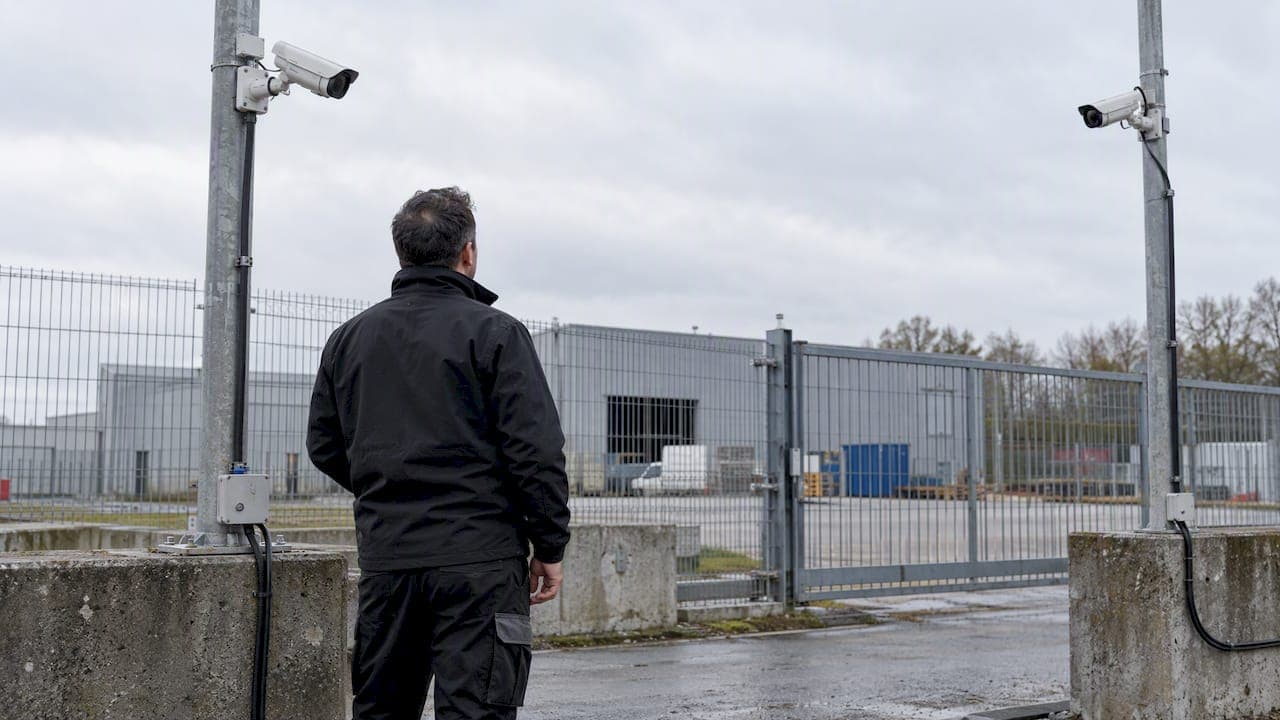
30–90 Day Pilot Validates Redundant Camera Networks for Engineers
Standards led, practical steps for engineers to deploy redundant camera networks: MRP, dual homing, and aggregation patterns, commissioning checks, and...
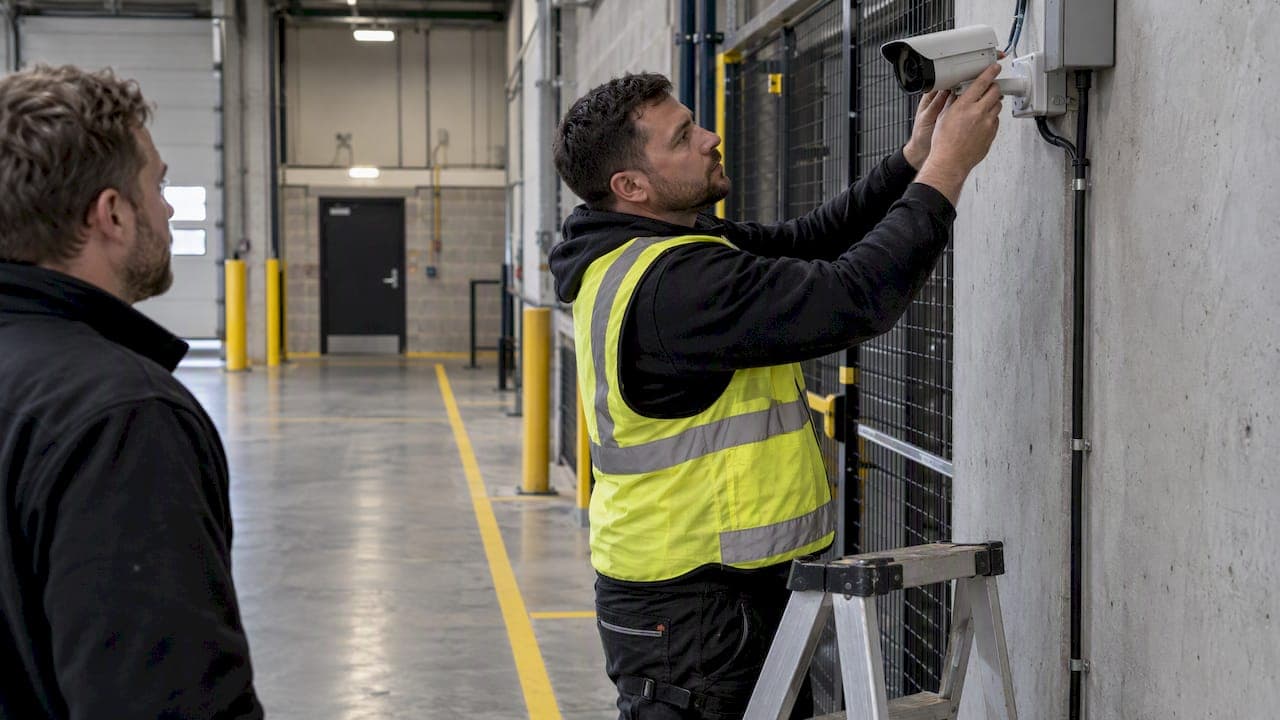
30 Day Pilot Proves Video Analytics Accuracy for Security Teams
Validate video analytics accuracy with scenario tests, camera tuning, transfer learning and a 30 day edge first pilot for security teams.
Let's Build YourSecurity Ecosystem.
Whether you're a System Integrator, Solution Provider, or an End-User looking for trusted advisory, our team is ready to help you navigate the BeyondSensor landscape.
Direct Advisory
Connect with our regional experts for tailored solutioning.