
Discover why advanced sensors are critical for physical security in Southeast Asia. Learn integration steps, ROI insights, and how smart sensing closes critical security gaps.

Why advanced sensors are essential for physical security

TL;DR:
- Traditional security tools are insufficient against evolving sophisticated threats in Southeast Asia.
- Advanced sensors like AI cameras and thermal imaging improve detection accuracy and response speed.
- Successful integration requires structured planning, staff training, and operational workflow redesign.
Physical security leaders across Southeast Asia face a difficult truth: the tools that worked five years ago are no longer enough. Sophisticated intrusion methods, cyber-physical attacks, and coordinated breaches are outpacing traditional alarms and standard CCTV networks. Advanced sensors are not a luxury upgrade; they are the operational foundation of any credible modern security strategy. This guide breaks down exactly why that shift is happening, what advanced sensor technologies bring to the table, how to integrate them without disrupting operations, and what the real return on investment looks like for facilities across the region.
Table of Contents
- How security threats are evolving in Southeast Asia
- What advanced sensors can do that traditional security cannot
- Integrating advanced sensors into your security ecosystem
- Cost-benefit analysis and ROI of sensor-driven security upgrades
- Our perspective: What most security managers overlook about advanced sensors
- Next steps: Elevate your facility security with BeyondSensor
- Frequently asked questions
Key Takeaways
| Point | Details |
|---|---|
| Rising threats | Evolving tactics in Southeast Asia require smarter security approaches for effective protection. |
| Sensor advantages | Advanced sensors offer greater accuracy, real-time alerts, and lower false positives than traditional devices. |
| Seamless integration | Modern sensors can be added to existing security systems through staged, practical upgrades. |
| Measurable ROI | Sensor deployments reduce incidents and security costs, making a strong business case for adoption. |
How security threats are evolving in Southeast Asia
The threat landscape targeting industrial and commercial sites across Southeast Asia has changed significantly in recent years. Attackers are no longer relying on simple brute-force entry. Instead, they combine digital reconnaissance with physical access techniques, exploiting blind spots in traditional surveillance coverage. The result is a class of incident that older systems were simply never designed to catch.
Recent breaches in Southeast Asian facilities used methods that traditional surveillance missed entirely. This is not a technology gap you can patch with more cameras pointing in the same directions.
Here are the most common tactics security managers are now encountering on the ground:
- Signal jamming: Disabling wireless alarms before physical entry
- Sensor spoofing: Feeding false video or motion data to fool legacy systems
- Tailgating and credential sharing: Exploiting gaps in access control during shift changes
- Multi-vector timing: Coordinating distractions with physical breaches across facility zones
- Environmental camouflage: Moving during weather events or at sensor refresh intervals
Traditional systems have predictable limitations. Fixed-angle cameras miss lateral movement. Motion detectors trigger on animals and HVAC vibration. Alarms escalate alerts without context, overloading operators and causing alert fatigue. Security teams end up responding to noise rather than real threats.
"The gap is not in effort but in capability. Teams working with dated tools will always be one step behind attackers who study and exploit system boundaries."
Exploring physical security workflow upgrades reveals just how much operational friction can be removed when sensor data feeds directly into coordinated response protocols. The organizations that already shifted to sensor-driven models are responding faster and with greater precision. Keeping up with security technology trends is no longer optional for facilities with genuine risk exposure.
What advanced sensors can do that traditional security cannot
With threats evolving beyond traditional defenses, it's critical to see how advanced sensors change the game. The category covers a wide range of hardware and intelligence layers, each addressing a different gap that standard systems leave open.
Key sensor types now deployed in serious physical security programs include:
- AI-driven cameras with real-time video analytics that classify behavior, not just detect motion
- Thermal imaging sensors that identify heat signatures through smoke, darkness, and partial obstructions
- Vibration and acoustic sensors that detect drilling, glass breaking, or perimeter fence tampering
- Integrated IoT sensor modules that correlate data across zones and feed unified dashboards
- Environmental sensors that flag unusual conditions such as temperature spikes or chemical presence
The benefits of advanced sensing go far beyond detection. These systems learn patterns over time, flag anomalies in context, and reduce the cognitive load on your security team. Advanced sensors deliver higher accuracy and broader coverage compared to conventional alternatives, which means fewer gaps and faster validated alerts.
| Feature | Traditional systems | Advanced sensors |
|---|---|---|
| Coverage area | Fixed zones only | Dynamic, overlapping zones |
| False alarm rate | High | Significantly reduced |
| Response time | Manual review required | Automated alert with context |
| Analytics capability | None or basic motion | AI-driven behavioral analysis |
| Integration | Siloed | Cross-system, IoT-ready |
| Long-term cost | High maintenance | Lower operational overhead |
The sensing solutions advantages become especially clear when you compare incident resolution times. Facilities running AI-integrated sensors validate threats in seconds, not minutes.

Pro Tip: When selecting sensors, prioritize platforms with embedded AI analytics. This single factor has the greatest impact on reducing false alarms and improving operator trust in the system output.
Integrating advanced sensors into your security ecosystem
Understanding the value of advanced sensors leads naturally to practical integration for maximum impact. The challenge most security managers face is not a lack of budget but a lack of a structured approach to layering new technology onto existing infrastructure.
Integrating advanced sensors with legacy systems enhances response capabilities without requiring a full system replacement. The key is a phased plan that protects operational continuity while building toward a fully connected security ecosystem.
Follow these integration steps as a proven framework:
- Infrastructure audit: Map all existing sensors, cameras, alarms, and access control points. Identify coverage gaps and data flow bottlenecks.
- Risk-zone prioritization: Rank facility zones by threat exposure. High-risk areas get first-phase sensor upgrades.
- Pilot deployment: Install advanced sensors in the highest-priority zone. Run parallel operations with existing systems for 30 to 60 days.
- Data integration: Connect new sensors to your central management platform. Establish unified alerting and reporting workflows.
- Training and protocol update: Equip your security team with the skills to interpret sensor data and act on AI-generated alerts.
- Full rollout and review: Expand deployment across remaining zones. Schedule quarterly performance reviews.
| Phase | Timeline | Expected outcome |
|---|---|---|
| Audit and planning | Weeks 1 to 2 | Gap map and priority list |
| Pilot zone deployment | Weeks 3 to 8 | Baseline performance data |
| System integration | Weeks 9 to 12 | Unified dashboard active |
| Full deployment | Months 4 to 6 | Complete facility coverage |
| Ongoing review | Quarterly | Continuous improvement loop |
Reviewing sensor integration steps in detail helps security directors anticipate interoperability challenges before they stall deployment. Understanding top sensor technologies for facility security supports smarter procurement decisions at each phase.
Pro Tip: Start your pilot in the highest-risk zone, not the easiest one to instrument. Early wins in difficult environments build internal confidence and demonstrate real ROI to stakeholders faster.
Cost-benefit analysis and ROI of sensor-driven security upgrades
After mapping integration steps, it's critical to weigh the economic impact and proven ROI of this technology. The upfront investment is real, but the long-term operational economics consistently favor advanced sensor adoption.
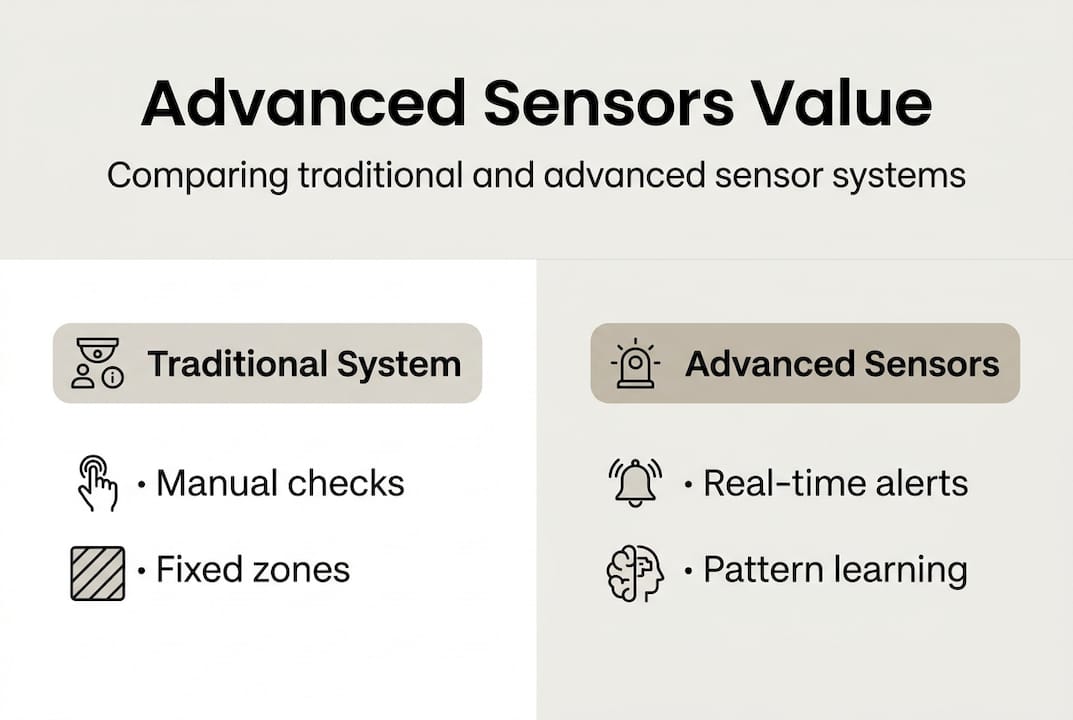
Facilities report lower incident rates and operational costs after implementing smart sensors. This is not a marginal gain. Security managers regularly document measurable reductions in both loss events and the personnel hours spent on false alarm response. The security efficiency insights from post-deployment reviews consistently point to faster response cycles and fewer costly incidents.
The financial case breaks down into direct and indirect returns:
- Reduced loss events: Fewer successful intrusions mean lower replacement and repair costs
- Lower insurance premiums: Documented sensor deployments frequently qualify facilities for reduced coverage rates
- Fewer guard hours on reactive response: Automation frees personnel for higher-value tasks
- Regulatory and compliance savings: Smart sensors support audit trails that simplify compliance reporting
- Asset protection: Proactive detection prevents damage before it escalates
- Energy and operational savings: Environmental sensors optimize facility conditions beyond security functions
The numbers that matter most to budget approval come from long-term operational data. Facilities that follow sensor-based security tips for phased deployment typically recoup initial investment within 18 to 36 months, with ongoing savings compounding annually as the system learns your facility's normal operating patterns.
The hardest cost to calculate is the cost of not upgrading. A single major breach event, including downtime, legal exposure, and reputational damage, routinely exceeds the full cost of a sensor deployment program.
Our perspective: What most security managers overlook about advanced sensors
Having reviewed ROI, let's consider what seasoned experts observe with real sensor deployments. The most common mistake is treating sensor installation as the finish line. It is not. It is the starting line.
Buying and deploying advanced sensors without redesigning workflows and training staff produces marginal results. The technology can only perform as well as the processes built around it. We have seen facilities with excellent sensor hardware generate limited value simply because alert response protocols were never updated to match the new data volume and speed.
The insights on sensor benefits from real deployments across Southeast Asia make one thing clear: cultural and operational change is as important as the hardware. Security teams need training not just on how to use the tools, but on how to think differently about threat data. Pattern recognition, anomaly review, and exception-based monitoring all require a shift in operational mindset.
The facilities that extract the most value from advanced sensors are the ones that commit to that process transformation alongside the technology investment.
Next steps: Elevate your facility security with BeyondSensor
Translating understanding into practical solutions requires a partner with deep regional expertise and proven deployment experience. BeyondSensor brings both.

Our solutions for security agencies are purpose-built for the operational realities of Southeast Asian facilities, from high-density industrial sites in Malaysia to commercial infrastructure across the Philippines and Singapore. Whether you are planning a first deployment or scaling an existing sensor network, our advanced sensor tools and technical support resources are designed to reduce complexity and accelerate results. Visit the BeyondSensor platform to connect with our regional team and explore tailored security configurations for your environment.
Frequently asked questions
What are the main types of advanced sensors used in physical security?
Modern sensor types include AI-powered cameras, thermal sensors, vibration detectors, and smart IoT modules, each providing a distinct detection layer for comprehensive facility coverage.
How do advanced sensors reduce false alarms in surveillance?
Smart analytics in sensors reduces the rate of false alarms by processing real-time data to distinguish genuine threats from routine environmental activity, so your team responds to validated events only.
Is the investment in advanced sensors justified for small and midsize facilities?
Yes. Even midsize operations see clear value from scalable sensor options that deliver broad coverage and measurable long-term savings on both incident response and operational overhead.
Can advanced sensors integrate with older security systems?
Most modern sensors are built for interoperability. Integration best practices help organizations layer advanced sensor technology over legacy alarms and CCTV networks without requiring a full infrastructure replacement.
Recommended
- Optimize physical security workflows with advanced sensors | News | BeyondSensor
- Understanding advanced sensing: boost security and efficiency | News | BeyondSensor
- Top advantages of sensing solutions for secure facilities | News | BeyondSensor
- Top intelligent sensing technologies to boost facility security | News | BeyondSensor
Read More Articles
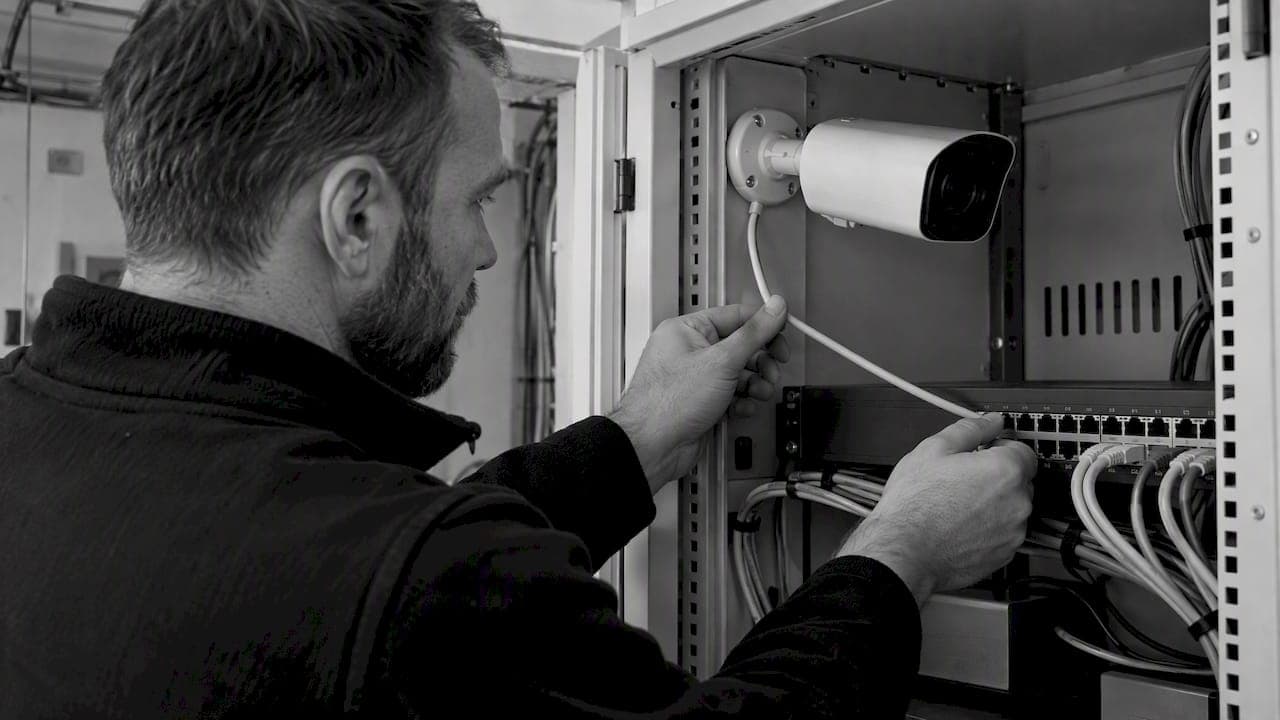
RTSP Security Risks: Integrators Must Block Exposed Ports 554 and 8554
See how integrators can reduce RTSP security risks: close exposed ports 554 and 8554, secure camera access, and verify each deployment with practical checks.

Require MAEpp and X Accuracy Before You Buy People Counting Systems
Verify people counting accuracy by demanding MAEpp, X Accuracy, and directional-bias reports. Validate on-site with at least 100 events per direction...
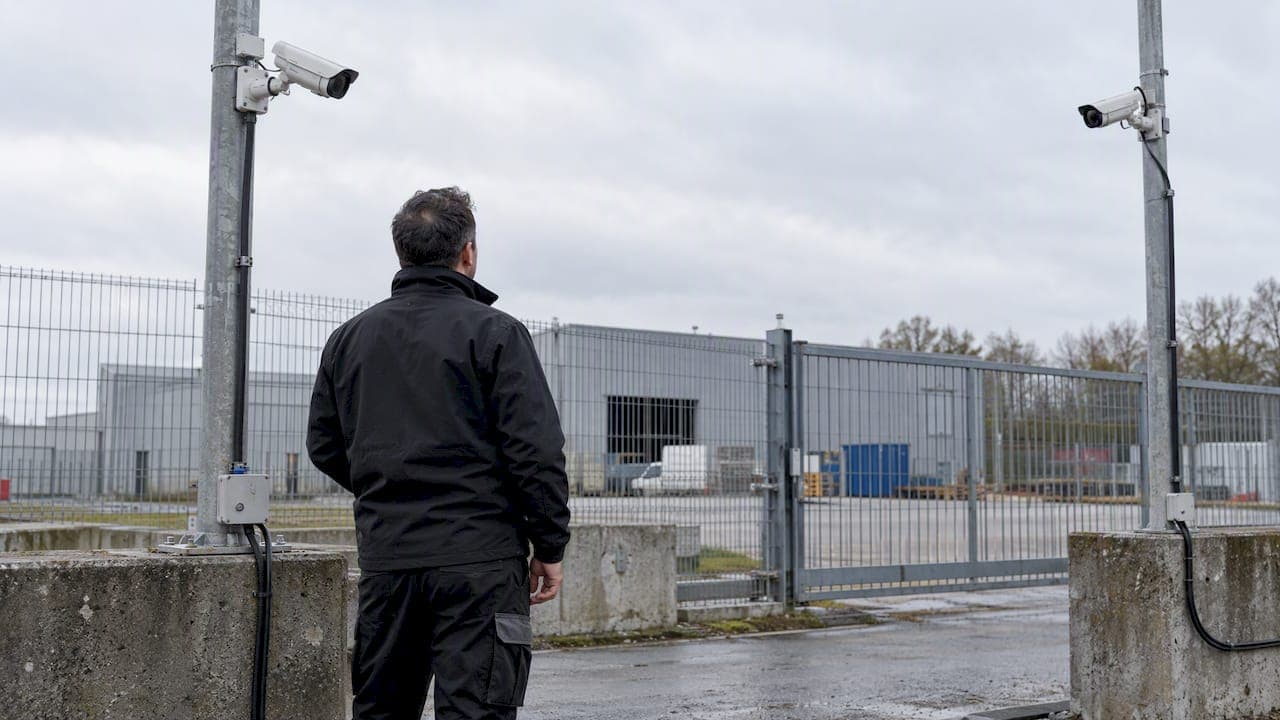
30–90 Day Pilot Validates Redundant Camera Networks for Engineers
Standards led, practical steps for engineers to deploy redundant camera networks: MRP, dual homing, and aggregation patterns, commissioning checks, and...
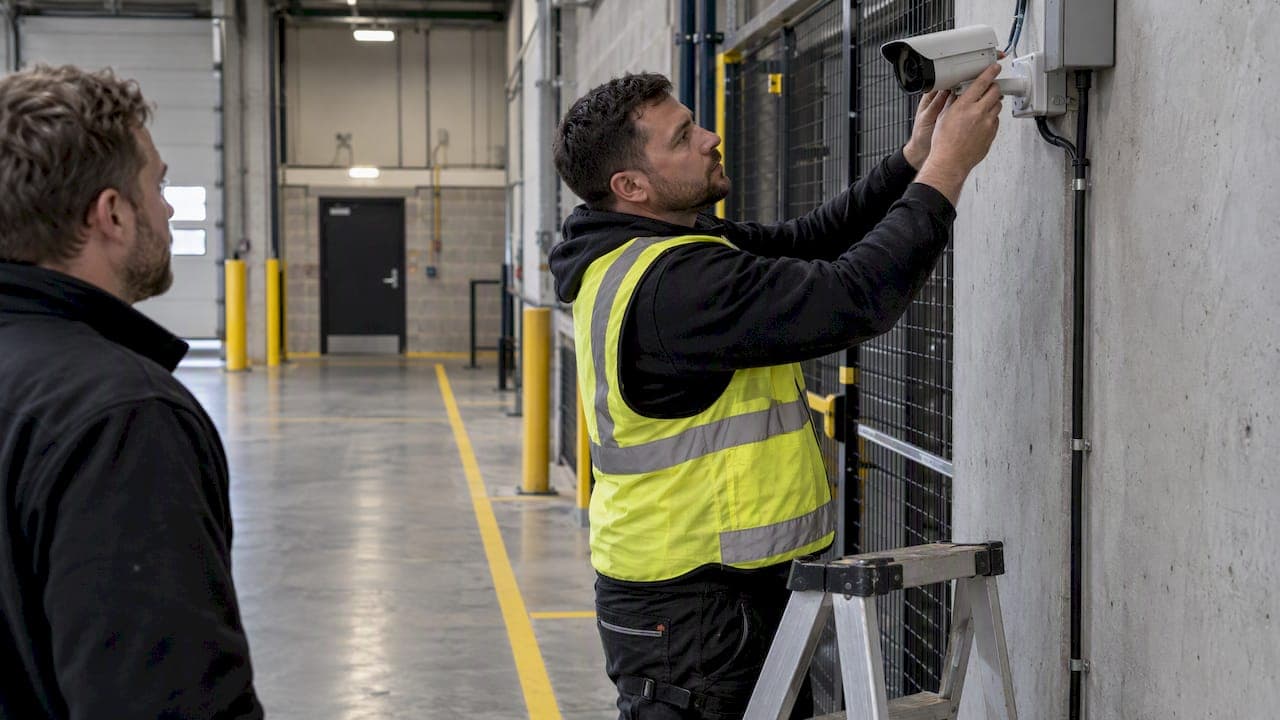
30 Day Pilot Proves Video Analytics Accuracy for Security Teams
Validate video analytics accuracy with scenario tests, camera tuning, transfer learning and a 30 day edge first pilot for security teams.
Let's Build YourSecurity Ecosystem.
Whether you're a System Integrator, Solution Provider, or an End-User looking for trusted advisory, our team is ready to help you navigate the BeyondSensor landscape.
Direct Advisory
Connect with our regional experts for tailored solutioning.