
Discover proven physical security best practices using NIST, DHS, and OSCE frameworks to build layered, resilient, and operationally efficient security programs.

Physical security best practices: strategies for safer facilities

TL;DR:
- Effective physical security relies on layered defense-in-depth strategies combining barriers, access controls, detection, and response.
- Continuous risk assessments and adherence to NIST controls are essential for maintaining security maturity and adaptation.
- Strong security programs are ongoing, dynamic systems that require regular testing, staff training, and integration of intelligent sensing technologies.
A single security gap can cost an organization far more than the incident itself. Beyond the immediate financial exposure, breaches erode stakeholder confidence, disrupt operations, and invite regulatory scrutiny that compounds over time. Security decision-makers and facility managers face a genuinely difficult task: choosing from a rapidly expanding catalog of technologies, frameworks, and vendor promises while threats continue to evolve. This article cuts through the noise. You will find evidence-backed strategies, structured frameworks, and practical guidance drawn from authoritative sources including NIST, DHS, and OSCE to help you build a physical security program that is both resilient and operationally sound.
Table of Contents
- Establishing a layered security framework
- Core NIST controls and policy foundations
- Conducting ongoing risk and threat assessments
- Countering modern and emerging threats
- Bridging technology, people, and operations
- Our perspective: the framework is not the finish line
- Elevate your security program with BeyondSensor
- Frequently asked questions
Key Takeaways
| Point | Details |
|---|---|
| Layered protection works best | A multi-layered security design is proven to deter, delay, and detect more threats than single-method approaches. |
| NIST controls provide structure | Implementing core NIST PE controls ensures systematic policy and accountability. |
| Assess threats continuously | Regular risk and threat assessments allow for rapid adaptation to new and evolving risks. |
| Modern threats require new tactics | Countermeasures must address not just basic risks but also sophisticated and unconventional attack scenarios. |
| People and tech must align | Operational success comes from training, technology adoption, and efficient processes working in unison. |
Establishing a layered security framework
With the stakes set, it is essential to understand what an effective security framework truly looks like. The concept at the center of modern physical security is defense-in-depth, a strategy that deploys multiple, overlapping layers of protection so that no single failure exposes the entire facility. If one control is bypassed, the next layer catches what slipped through.
A layered security approach using perimeter barriers, access controls, intrusion detection, lighting, video surveillance, and security screening remains the industry standard for good reason. Each layer serves a distinct function:
- Perimeter layer: Fencing, bollards, vehicle barriers, and signage establish the first line of deterrence and delay.
- Access control layer: Badge readers, biometric systems, and manned entry points regulate who enters and when.
- Detection layer: Intrusion sensors, motion detectors, and video analytics identify anomalies in real time.
- Response layer: Alarm protocols, guard dispatch, and lockdown procedures convert detection into action.
Common mistakes undermine even well-funded programs. Single-layer reliance is the most dangerous: organizations that invest heavily in perimeter controls but neglect interior monitoring create predictable blind spots. Weak integration between systems, where cameras and access logs do not communicate, fragments situational awareness. Overreliance on technology without human verification leads to missed context that sensors cannot interpret alone.
"No single security measure is sufficient. The combination of physical barriers, procedural controls, and detection technologies creates the resilience that individual solutions cannot achieve alone."
Refer to an infrastructure security checklist to audit which layers are fully implemented and where gaps exist across your facility portfolio.
Pro Tip: Schedule quarterly tabletop exercises where security, IT, and operations teams test how each layer responds to a simulated breach. Cross-functional rehearsal reveals integration gaps faster than any audit.
Core NIST controls and policy foundations
With a structural approach in place, formalized controls and standards are the next vital layer of security maturity. NIST SP 800-53 Revision 5 Physical and Environmental Protection (PE) controls provide the most widely adopted framework for documenting, implementing, and auditing physical security at the organizational level.
Core NIST PE controls-[CIO-IT-Security-12-64-Rev-5]%2007-08-2025.pdf) include policy and procedures (PE-1), physical access authorizations (PE-2), physical access control (PE-3), monitoring physical access (PE-6), visitor access records (PE-8), power equipment (PE-9), emergency shutoff (PE-10), fire protection (PE-13), and environmental controls (PE-14). These are not optional guidelines for regulated industries. They are the baseline.
The most critical PE controls for facility managers to prioritize include:
- PE-1 (Policy and procedures): Establish a written physical security policy reviewed at least annually.
- PE-2 (Physical access authorizations): Maintain a current list of authorized personnel with defined access levels.
- PE-3 (Physical access control): Deploy and document controls at all entry and exit points.
- PE-6 (Monitoring physical access): Review access logs regularly and investigate anomalies promptly.
- PE-8 (Visitor access records): Log all visitor entries and exits with time stamps and escort assignments.
| NIST PE control | Implementation best practice | Review frequency |
|---|---|---|
| PE-1: Policy | Document and distribute to all staff | Annual |
| PE-2: Authorizations | Audit access lists against HR records | Quarterly |
| PE-3: Access control | Test all entry points and credential systems | Semi-annual |
| PE-6: Monitoring | Automate log review with alert thresholds | Continuous |
| PE-8: Visitor records | Verify log completeness after each shift | Daily |
Documented policies are only as strong as the processes behind them. Controls that exist on paper but are not operationalized create a false sense of compliance. Review your NIST compliance guide to map your current state against these requirements and identify priority remediation areas.
Conducting ongoing risk and threat assessments
Standards guide what to do, but ongoing assessment defines how well you are protected day-to-day. A risk assessment is not a one-time project. It is a continuous process that must adapt as your assets, operations, and threat environment change.
The DHS Physical Security Guide identifies ongoing risk assessments, an all-hazards threat approach, insider threat management, training and exercises, and business continuity planning as foundational to any mature security program. Each element feeds the others.
A structured assessment cycle includes these steps:
- Asset identification: Catalog all physical assets, people, data repositories, and critical systems by location and value.
- Threat catalog: Document known and plausible threats relevant to your industry, geography, and operational profile.
- Vulnerability mapping: Test each asset against identified threats to find exploitable gaps in controls or procedures.
- Probability analysis: Score each threat-vulnerability pair by likelihood and potential impact to prioritize remediation.
Organizations that conduct proactive, recurring assessments detect vulnerabilities an average of 60% faster than those relying on reactive audits, significantly reducing the window of exposure.
Effective insider threat management must be woven into every assessment cycle, not treated as a separate workstream. Insider incidents are consistently underreported and often more damaging than external breaches because they bypass perimeter controls entirely.
Pro Tip: After any real incident, conduct a formal lessons-learned review within 72 hours. Document what the assessment missed, update your threat catalog, and revise vulnerability scores before the next cycle begins.
Countering modern and emerging threats
New challenges demand methods that reach beyond the basics of physical access and procedural controls. Modern attackers rarely follow a predictable script. Hostile reconnaissance, where adversaries systematically observe facility patterns before acting, is increasingly common and difficult to detect through conventional means.
Edge-case threats including vehicle attacks, explosives, Chemical/Biological/Radiological/Nuclear (CBRN) agents, firearms, and hostage situations require countermeasures like target hardening, invacuation protocols, and lockdown plans that go well beyond standard access control. Detection and mitigation strategies by threat type include:
- Hostile reconnaissance: Train staff to recognize and report unusual observation behavior; install wide-area cameras at facility approaches.
- Vehicle attacks: Deploy rated bollards and standoff barriers at pedestrian zones and building entrances.
- CBRN threats: Install environmental sensors and establish decontamination protocols with local emergency services.
- Firearms and hostage situations: Conduct active threat response drills and maintain direct communication links to law enforcement.
| Threat vector | Conventional countermeasure | Advanced countermeasure |
|---|---|---|
| Perimeter breach | Fencing and guards | AI-powered video analytics with behavioral detection |
| Insider access abuse | Badge audits | Anomaly detection integrated with HR and access systems |
| Vehicle attack | Concrete barriers | Rated anti-ram bollards with sensor-triggered alerts |
| CBRN exposure | Manual inspection | Automated environmental monitoring with real-time alerts |
A risk-based all-hazards approach avoids the siloed thinking that leaves organizations blind to cross-vector attacks. Empirical benchmark data shows that technology adoption gaps and operational pain points remain the most common barriers to effective response.
"Siloed security thinking is the attacker's greatest ally. When physical, cyber, and operational teams do not share intelligence, gaps emerge that no single team can see."
Explore intelligent security technologies that integrate detection across multiple threat vectors into a unified operational picture.
Bridging technology, people, and operations
Solving tactical threats is only half the story. The other half is ensuring your people, processes, and technology work together smoothly. Benchmark data from a survey of 300-plus professionals in physical security operations reveals that high staff turnover, alert fatigue from false alarms, and technology adoption gaps are the top operational pain points affecting security program effectiveness.

These are not abstract challenges. High turnover means institutional knowledge walks out the door regularly. Alert fatigue causes genuine threats to be dismissed alongside false positives. Technology gaps mean expensive systems go underutilized because staff lack the training to operate them confidently.
Addressing each requires a structured approach:
- Staff retention and training: Invest in certification programs, clear career pathways, and regular skills development. Security professionals who see growth opportunities stay longer and perform better.
- Integrated systems: Deploy platforms where access control, video, and sensor data feed into a single dashboard. Integration reduces the cognitive load on operators and surfaces meaningful alerts instead of noise.
- Cross-team debriefs: Schedule monthly reviews where security operations, IT, and facility management share incident data and refine response procedures together.
- Automation with human oversight: Use AI-driven analytics to pre-filter alerts so operators review only high-confidence events. This preserves human judgment for decisions that matter most.
One regional infrastructure operator reduced false alarm response time by 40% after integrating sensor feeds with video analytics and establishing a tiered alert protocol. Operators focused on verified events rather than raw alarm volume.
Pro Tip: When deploying new automation tools, run a parallel period where both the old and new workflows operate simultaneously. This builds staff confidence and surfaces calibration issues before full cutover.
Review physical security workflow optimization strategies and stay current on emerging security tech trends to keep your operational model ahead of the threat curve.
Our perspective: the framework is not the finish line
Here is something most security guides will not tell you: adopting a framework like NIST 800-53 or implementing a layered architecture is the beginning of the work, not the outcome. We see organizations invest significantly in compliance documentation and technology procurement, then treat the program as complete. That is precisely when vulnerability grows.
The facilities that maintain genuinely strong security postures are the ones that treat their programs as living systems. They run unannounced drills. They rotate assessment teams to avoid familiarity bias. They actively seek out the assumptions baked into their threat models and challenge them. The uncomfortable truth is that a security program optimized for last year's threat landscape is already partially obsolete.
Decision-makers who want results should prioritize operational feedback loops over static compliance. Ask your security team what they cannot see, not just what they can. The answer to that question will tell you more about your actual risk exposure than any audit report.
Elevate your security program with BeyondSensor
Building a security program that is both compliant and operationally effective requires more than frameworks and checklists. It requires the right sensing infrastructure, validated for your specific environment.

BeyondSensor delivers high-precision, intelligent sensing technologies purpose-built for physical security and infrastructure applications across Singapore, Malaysia, the Philippines, and beyond. Whether you are hardening a critical facility, integrating detection systems, or optimizing security workflows, our hardware-software solutions are engineered to close the gaps that frameworks identify but cannot fill on their own. Connect with our regional team to assess your current security posture and identify where sensor-based intelligence can deliver the most measurable impact for your operations.
Frequently asked questions
What are the essential components of a physical security strategy?
A robust strategy integrates layered barriers and controls including perimeter barriers, access control, surveillance, intrusion detection, and ongoing assessment, with documented response planning to connect all elements.
How often should risk and threat assessments be conducted?
Assessments should be ongoing and formally reviewed at least annually, with immediate updates triggered by significant changes in assets, operations, or the threat environment.
How do you address alert fatigue and high turnover in security operations?
Benchmark data from 300-plus security professionals points to integrated technology platforms, structured staff training, and streamlined alert workflows as the most effective combined response to both challenges.
What is the role of NIST 800-53 controls in physical security?
NIST SP 800-53 PE controls-[CIO-IT-Security-12-64-Rev-5]%2007-08-2025.pdf) provide a structured, auditable framework for implementing and documenting physical security measures, from access authorization through environmental monitoring and fire protection.
Recommended
- Physical security compliance: standards and sensor tech guide | News | BeyondSensor
- Optimize physical security workflows with advanced sensors | News | BeyondSensor
- Essential security checklist for infrastructure: 18 safeguards | News | BeyondSensor
- Top advantages of sensing solutions for secure facilities | News | BeyondSensor
Read More Articles
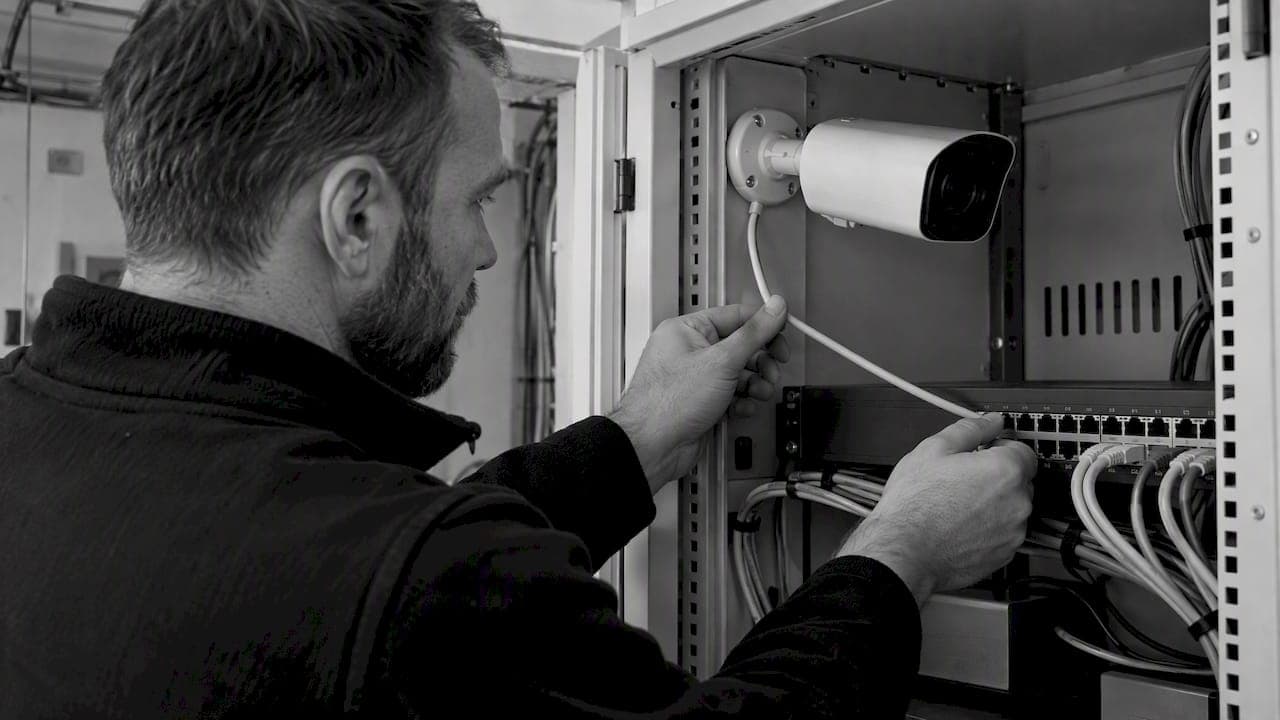
RTSP Security Risks: Integrators Must Block Exposed Ports 554 and 8554
See how integrators can reduce RTSP security risks: close exposed ports 554 and 8554, secure camera access, and verify each deployment with practical checks.

Require MAEpp and X Accuracy Before You Buy People Counting Systems
Verify people counting accuracy by demanding MAEpp, X Accuracy, and directional-bias reports. Validate on-site with at least 100 events per direction...
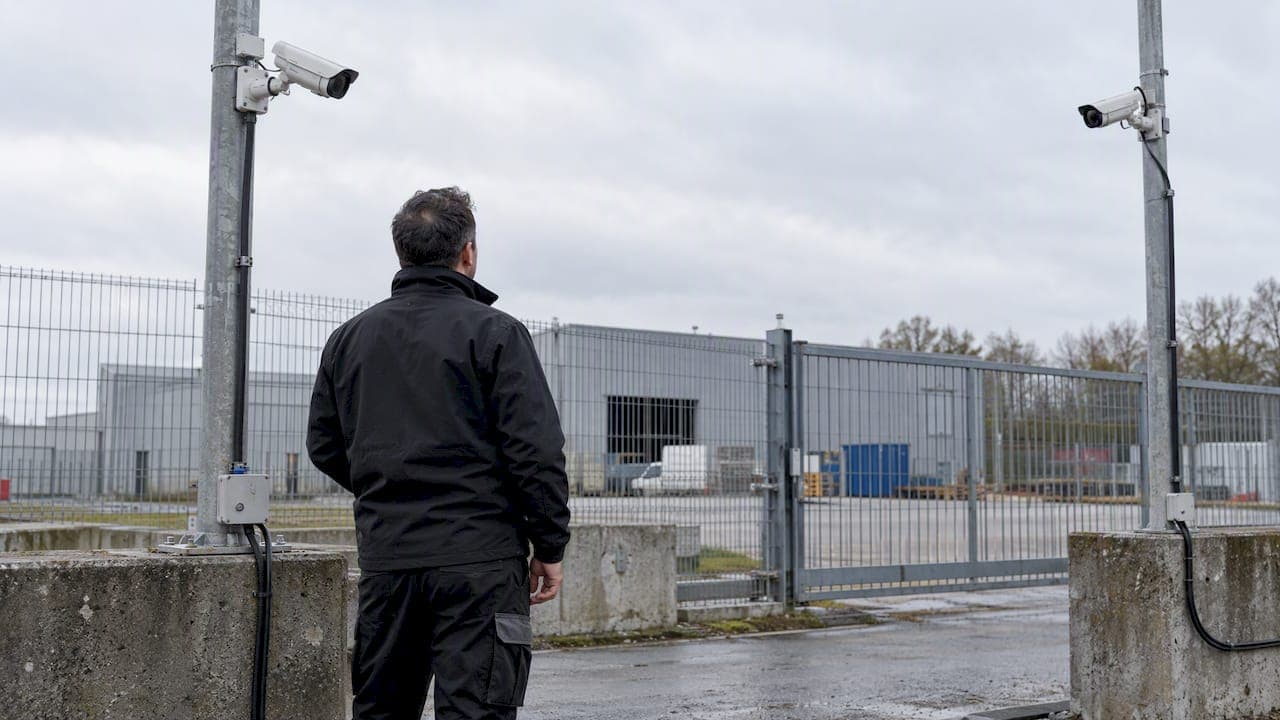
30–90 Day Pilot Validates Redundant Camera Networks for Engineers
Standards led, practical steps for engineers to deploy redundant camera networks: MRP, dual homing, and aggregation patterns, commissioning checks, and...

30 Day Pilot Proves Video Analytics Accuracy for Security Teams
Validate video analytics accuracy with scenario tests, camera tuning, transfer learning and a 30 day edge first pilot for security teams.
Let's Build YourSecurity Ecosystem.
Whether you're a System Integrator, Solution Provider, or an End-User looking for trusted advisory, our team is ready to help you navigate the BeyondSensor landscape.
Direct Advisory
Connect with our regional experts for tailored solutioning.