
Discover the role of digital twins in security. Learn how these powerful tools enhance threat detection and improve defense strategies.

The Role of Digital Twins in Security: 2026 Guide

TL;DR:
- Digital twins in security are real-time virtual replicas of physical or digital systems that enable threat detection, attack simulation, and mitigation.
- They outperform traditional methods with up to 97.6% detection accuracy and under 50 ms latency, proving operational usefulness.
Digital twins in security are defined as real-time virtual replicas of physical or digital systems that enable continuous threat detection, attack simulation, and prescriptive mitigation. The role of digital twins in security has expanded well beyond visualization. Security professionals now deploy these models to predict attack paths, map infrastructure assets, and validate defenses before threats materialize. Research shows that digital twin-enhanced frameworks achieve up to 97.6% precision in detecting cyberattacks on industrial control systems, outperforming transformer-only detection models. That number signals a fundamental shift: digital twin technology in security is no longer experimental. It is operationally proven.
How do digital twins enhance security through real-time monitoring?
Digital twins enhance security by creating a continuously synchronized virtual model of your infrastructure that detects anomalies the moment they deviate from expected behavior. Traditional security tools rely on signature-based detection or periodic scans. Digital twins run physics-consistent state models that catch behavioral drift in real time, even for attacks with no known signature.

The detection mechanism matters. Effective industrial security twins combine physics-aware state-space process models with Extended Kalman Filters and deep learning ensembles. This hybrid approach reduces false positives that plague data-driven-only models by anchoring anomaly scores to physical laws, not just statistical patterns. A sensor reading that violates thermodynamic constraints triggers an alert regardless of whether that pattern appears in training data.
Performance benchmarks from 2026 research confirm the operational case. Digital twin frameworks achieve sub-50 ms detection latency across 56 distinct attack scenarios. That speed means a compromised industrial controller gets flagged before it can propagate damage downstream.
Non-intrusive data ingestion is the other critical mechanism. Security twins built through passive multi-protocol network telemetry, ingesting ARP, mDNS, and SSDP traffic, map infrastructure assets within 48 hours without touching production systems. No agents. No disruption. The twin builds a high-fidelity topology graph purely from observed traffic patterns.
| Detection Method | Latency | Accuracy | Production Impact |
|---|---|---|---|
| Signature-based IDS | Variable | Limited to known threats | Low |
| Periodic vulnerability scans | Hours to days | Point-in-time only | Moderate |
| Digital twin with AI ensemble | Under 50 ms | 97.6% precision, 96.2% recall | None (passive ingestion) |
Pro Tip: Deploy your security twin in passive ingestion mode first. Let it build the topology graph for 48–72 hours before enabling active alerting. This prevents false positives from incomplete asset maps during initial synchronization.
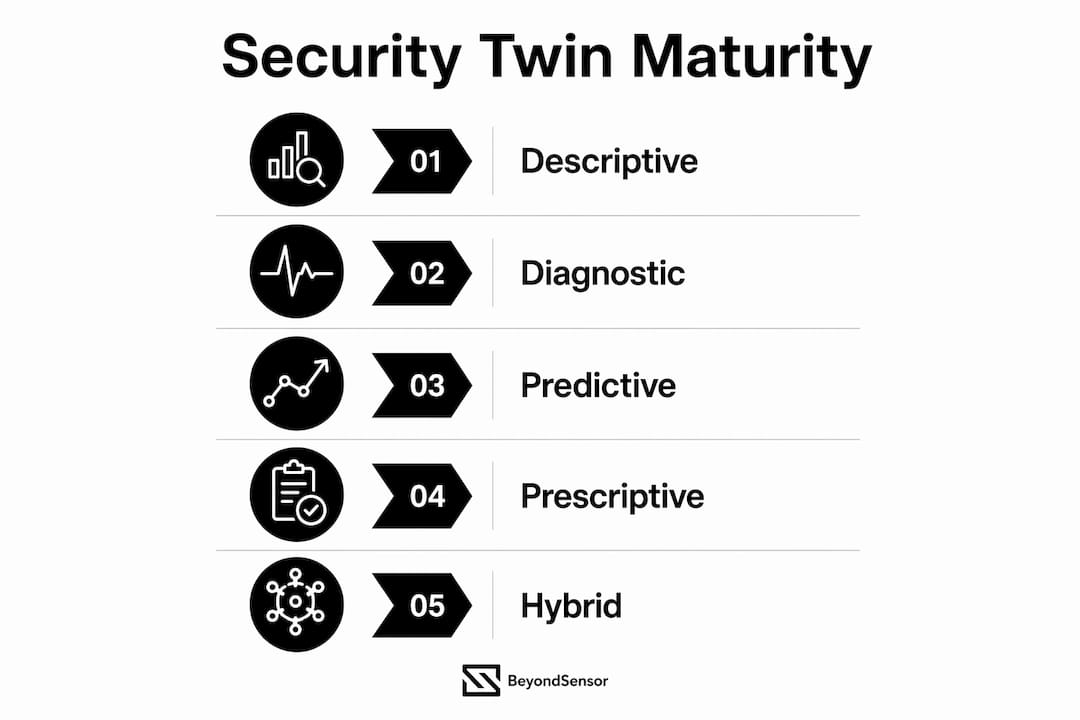
From descriptive to prescriptive: how security twin maturity works
Not all security twins deliver the same value. The maturity spectrum runs from Level 1 descriptive models, which visualize current system state, to Level 4 prescriptive models, which actively anticipate attack paths and validate mitigations before deployment. Most organizations deploying digital twin technology in security today operate at Level 1 or 2. That is a significant capability gap.
Descriptive twins show you what is happening. Prescriptive twins tell you what to do about it before it happens. Level 4 twins integrate real-time vulnerability intelligence feeds, run automated "what-if" simulations, and verify that a proposed patch or firewall rule actually closes the attack path it targets. Treating digital twins as static tools limits their value to dashboards. Prescriptive deployment turns them into autonomous defense engines.
Monte Carlo adversary simulations represent the most powerful prescriptive capability. The twin generates thousands of probabilistic attack scenarios based on current asset state and known vulnerability data. Security teams see which paths an adversary is most likely to exploit and can prioritize defenses accordingly. This is proactive defense grounded in quantitative risk, not intuition.
Hybrid digital inter-twins extend this further by modeling the relationship between cyberattacks and physical safety risks. A cyberattack on a building management system does not stay digital. It can disable fire suppression or unlock physical access controls. Hybrid inter-twins bridge that cyber-physical gap by maintaining synchronized models of both domains simultaneously. Security teams gain cross-domain threat visibility that neither a pure cybersecurity tool nor a physical security system can provide alone.
| Twin Type | Level | Key Capability | Best Use Case |
|---|---|---|---|
| Descriptive twin | 1–2 | Asset visualization, state monitoring | Baseline inventory and compliance |
| Prescriptive twin | 4 | Attack-path simulation, mitigation validation | Proactive threat hunting, patch prioritization |
| Hybrid digital inter-twin | Advanced | Cyber-physical cross-domain modeling | Critical infrastructure, smart buildings |
Pro Tip: Before investing in prescriptive capabilities, audit whether your twin's asset inventory is complete. A prescriptive model built on an incomplete topology produces attack-path simulations with dangerous blind spots.
Real-world applications in critical infrastructure and industrial control systems
The benefits of digital twins for security are most visible in high-stakes environments where a single undetected intrusion can cause physical harm or national-level disruption. Industrial control systems and critical infrastructure represent the clearest proof of concept.
Research from 2026 demonstrates that digital twin frameworks incorporating blockchain and insider threat simulation achieve 92.14% detection accuracy for critical infrastructure environments. The blockchain layer creates an immutable audit trail for every event the twin logs. That auditability matters for regulatory compliance and post-incident forensics. When an incident occurs, investigators can reconstruct the exact sequence of events from the twin's ledger rather than piecing together fragmented logs.
The operational impact extends beyond detection accuracy. The same framework recorded a 13% reduction in response time and a 14.06% reduction in operational delays. Faster response directly limits the blast radius of any successful intrusion.
Key benefits across sectors where digital twin security deployments show measurable results:
- Industrial control systems: Physics-aware twins detect process anomalies caused by cyberattacks before they trigger physical equipment failures.
- Energy and utilities: Continuous asset mapping identifies unmanaged devices and lateral movement paths that periodic scans miss.
- Smart buildings and campuses: Hybrid inter-twins correlate access control events with network anomalies to catch insider threats.
- Government and defense facilities: Prescriptive simulation validates security architecture changes without exposing live systems to test attacks.
- Healthcare infrastructure: Non-intrusive twins map medical device networks without disrupting patient care systems.
The forensic advantage deserves specific attention. A digital twin maintains a continuous state history of your infrastructure. After an incident, you can replay the twin's state timeline to identify exactly when a device was compromised, which lateral paths the attacker used, and what data was accessed. Traditional log-based forensics cannot reconstruct that level of fidelity. For teams working on cyber-physical security, this replay capability changes incident response fundamentally.
What are the main challenges in deploying security twins?
The technical case for digital twins in cybersecurity is strong. The organizational case is harder. Current research confirms that most cybersecurity analysis of digital twin deployment focuses narrowly on technical confidentiality and privacy, leaving governance and organizational challenges underexplored. That gap produces real-world failures that no amount of technical sophistication can fix.
Governance is the first barrier. Security twins require continuous data feeds from operational technology, IT networks, and physical sensors. Ownership of that data is often fragmented across departments, vendors, and regulatory jurisdictions. Without a clear data governance framework, the twin either receives incomplete feeds or becomes a compliance liability. Neither outcome serves security.
The second challenge is the gap between what twins can do and what teams are prepared to act on. A prescriptive twin generating 200 attack-path recommendations per day overwhelms a security team without the processes to triage and respond. Integrating deep reinforcement learning for real-time security orchestration addresses this by automating response prioritization, but it requires mature AI governance to deploy safely.
Standards alignment is the third hurdle. IEC 62443-4-2 provides component-level security requirements for industrial automation and control systems, but no equivalent standard yet governs security twin architecture or data fidelity requirements. Organizations deploying twins today are largely defining their own governance frameworks, which creates inconsistency across deployments.
Pro Tip: Map your data ownership before you build your twin. Identify which teams control OT telemetry, IT logs, and physical sensor feeds. Resolve access agreements before deployment, not after. Governance gaps discovered mid-deployment cause months of delay.
Key Takeaways
Digital twin technology in security delivers its highest value when deployed as a prescriptive, continuously updated system rather than a static visualization tool.
| Point | Details |
|---|---|
| Precision and recall benchmarks | Digital twin frameworks achieve 97.6% precision and 96.2% recall, outperforming traditional detection methods. |
| Passive ingestion maps assets fast | Non-intrusive twins using ARP and mDNS traffic map most infrastructure within 48 hours without disrupting operations. |
| Prescriptive twins outperform descriptive ones | Level 4 twins simulate attack paths and validate mitigations; Level 1–2 twins only visualize current state. |
| Governance gaps limit real-world success | Most deployments focus on technical privacy but neglect organizational and governance challenges that cause operational failures. |
| Hybrid inter-twins close the cyber-physical gap | Modeling cyberattacks alongside physical safety risks gives security teams cross-domain visibility no single-domain tool provides. |
Why I think most security teams are deploying twins wrong
Security professionals often treat digital twins as expensive dashboards. I have seen this pattern repeatedly: an organization invests in a twin, gets a beautiful topology visualization, and then uses it the same way they used their old network map. Static. Periodic. Reactive.
That approach wastes the technology's core capability. The value of a security twin is not what it shows you right now. It is what it predicts will happen next, and what it tells you to do about it before the attack lands. A twin that does not run continuous adversary simulations is a visualization tool with a large price tag.
The teams that get this right share one practice: they treat the twin as a living system, not a deployment artifact. They feed it real-time vulnerability intelligence, run Monte Carlo simulations on a scheduled basis, and use the output to drive patch prioritization and architecture decisions. The AI and deep learning integration is not optional in this model. It is what converts raw telemetry into prescriptive guidance.
The governance problem is equally underestimated. Technical teams build the twin. Nobody owns the data agreements that keep it accurate. Six months later, the OT team stops sharing telemetry because of a contract dispute, and the twin's asset map goes stale. The security value collapses silently. Fix the governance before you build the model.
— Eumir
Beyondsensor's approach to digital twin security integration
Beyondsensor builds sensor-based security infrastructure designed for the environments where digital twins deliver the most value: industrial automation, smart infrastructure, and critical facilities across Singapore, Malaysia, and the Philippines.
For system integrators deploying digital twin frameworks, Beyondsensor provides the hardware-software foundation that feeds accurate, real-time telemetry into security twin architectures. Precise sensor data is the raw material that determines whether a twin's anomaly detection performs at the 97% level or falls short. Beyondsensor's system integrator solutions connect physical sensing infrastructure with the digital models that security teams depend on for threat detection and response. The result is a security ecosystem where the twin's virtual model stays synchronized with ground truth, not with stale or incomplete data.
FAQ
What is the role of digital twins in security?
Digital twins in security are real-time virtual replicas of physical or digital systems that enable continuous threat detection, attack simulation, and prescriptive mitigation. They allow security teams to predict attack paths and validate defenses before threats materialize.
How accurate are digital twin security frameworks?
Digital twin-enhanced frameworks achieve up to 97.6% precision and 96.2% recall in detecting cyberattacks on industrial control systems, with detection latency under 50 ms across 56 attack scenarios.
What is a hybrid digital inter-twin?
A hybrid digital inter-twin models the relationship between cyberattacks and physical safety risks simultaneously, enabling cross-domain threat detection across both IT networks and physical infrastructure like access control or building management systems.
What are the biggest challenges in deploying security twins?
The primary challenges are governance and organizational alignment, not technical capability. Most deployments focus on technical confidentiality but lack clear data ownership frameworks and processes for acting on prescriptive twin outputs.
How do non-intrusive security twins work?
Non-intrusive security twins passively ingest network traffic protocols such as ARP, mDNS, and SSDP to build a high-fidelity infrastructure topology map within 48 hours, without deploying agents or disrupting production environments.
Recommended
Read More Articles
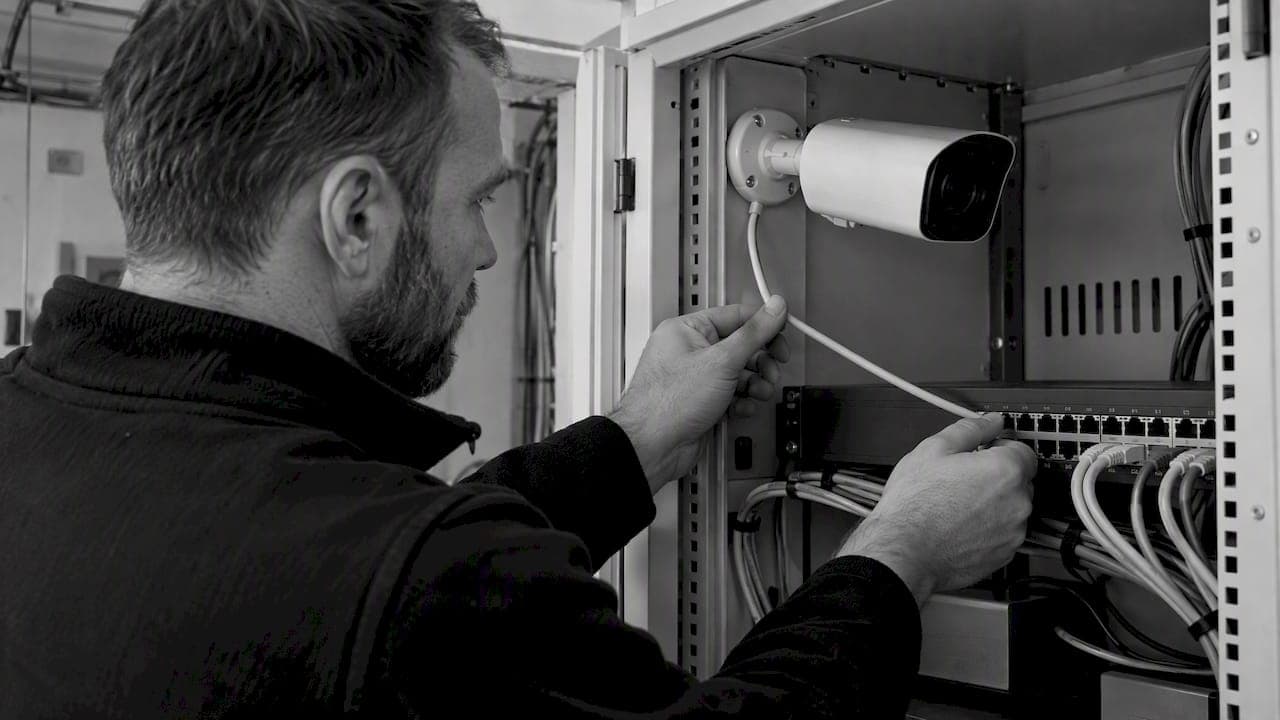
RTSP Security Risks: Integrators Must Block Exposed Ports 554 and 8554
See how integrators can reduce RTSP security risks: close exposed ports 554 and 8554, secure camera access, and verify each deployment with practical checks.
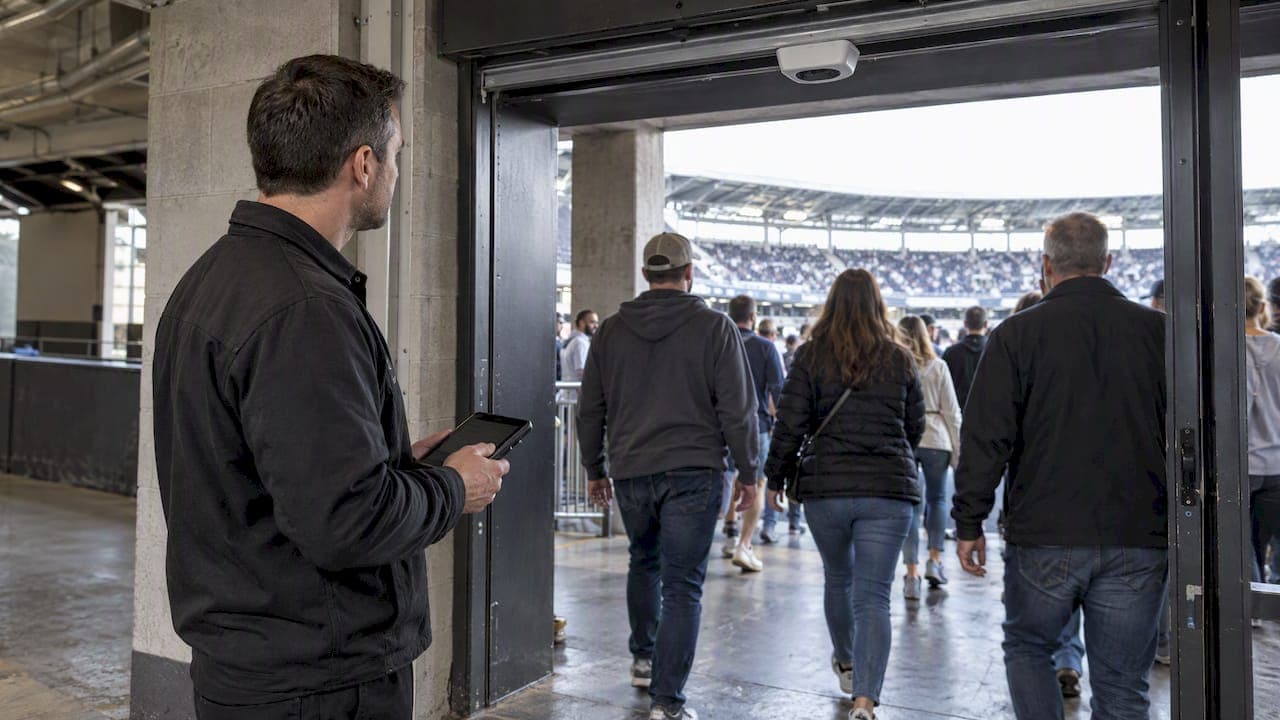
Require MAEpp and X Accuracy Before You Buy People Counting Systems
Verify people counting accuracy by demanding MAEpp, X Accuracy, and directional-bias reports. Validate on-site with at least 100 events per direction...
30–90 Day Pilot Validates Redundant Camera Networks for Engineers
Standards led, practical steps for engineers to deploy redundant camera networks: MRP, dual homing, and aggregation patterns, commissioning checks, and...
30 Day Pilot Proves Video Analytics Accuracy for Security Teams
Validate video analytics accuracy with scenario tests, camera tuning, transfer learning and a 30 day edge first pilot for security teams.
Let's Build YourSecurity Ecosystem.
Whether you're a System Integrator, Solution Provider, or an End-User looking for trusted advisory, our team is ready to help you navigate the BeyondSensor landscape.
Direct Advisory
Connect with our regional experts for tailored solutioning.