
Discover the transformative role of AI in facility management. Boost efficiency, cut costs, and enhance security strategies today!

AI in facility management: Boosting efficiency and security

TL;DR:
- AI reduces maintenance costs, energy use, and operational downtime significantly across facilities.
- Success depends on data quality, system integration, staff training, and human oversight.
- AI enhances human roles by freeing staff to focus on strategic, nuanced tasks rather than reactive operations.
Facility managers and security directors face a familiar frustration: systems that generate more alerts than answers, maintenance budgets that never seem to stretch far enough, and energy bills that defy every cost-cutting effort. AI in facility management is no longer an experimental concept reserved for tech-forward campuses. Empirical benchmarks confirm 25 to 30% maintenance cost reductions, 20 to 44% energy savings, and 30 to 45% less downtime in organizations that have moved from pilot programs to full deployment. This guide cuts through the noise and delivers a structured, evidence-backed look at what AI actually does, what results it produces, and how your team can capture those gains without the common pitfalls.
Table of Contents
- What AI actually does in facility management
- Core benefits: Cost, efficiency, and uptime gains
- Challenges and critical success factors
- From pilot to scale: Best practices for facility leaders
- AI's real promise for facility management: More human, not less
- Explore AI-driven solutions tailored for your facility
- Frequently asked questions
Key Takeaways
| Point | Details |
|---|---|
| AI cuts costs | Facilities using AI see substantial reductions in energy, maintenance, and overall operating expenses. |
| Human-AI partnership | Success depends on blending powerful analytics with informed human oversight to handle unique challenges. |
| Implementation challenges | Data integration, quality, and staff training are the biggest hurdles to AI adoption in facilities. |
| Start with pilot programs | Launching AI pilots with clear metrics and scaling thoughtfully delivers long-term value. |
What AI actually does in facility management
Now that we've introduced the scale of AI's impact, let's break down what artificial intelligence actually does day to day in modern facilities.
AI in facility management is not a single product or platform. It is a combination of machine learning models, sensor networks, and automation logic that continuously reads data from your building and acts on it. The clearest way to understand it is to look at the core systems it touches.
Energy and environmental control is where AI earns its most measurable returns. AI optimizes energy management by processing real-time data from smart meters, occupancy sensors, and environmental conditions to dynamically adjust HVAC and cooling, achieving reductions like Google's 40% in data center cooling or Stanford's $110,000 in annual savings. These are not theoretical projections. They are operational results from facilities that integrated intelligent sensing technologies into existing building management infrastructure.
Predictive maintenance is the second major function. Rather than servicing equipment on a fixed schedule or after failure, AI analyzes vibration, temperature, pressure, and acoustic data to flag anomalies before they cause breakdowns. A chiller that is starting to show irregular thermal cycling will trigger a maintenance alert weeks before it fails, not the morning it stops working during peak occupancy.
Security and access monitoring benefit from AI's pattern recognition capabilities. Computer vision systems trained on historical access logs and video data can flag unusual movement patterns, unauthorized access attempts, and occupancy anomalies in real time. This transforms security from a reactive function into an anticipatory one, reducing both incident frequency and response time.
Key functions AI handles across modern facilities:
- Real-time HVAC and lighting adjustments based on occupancy and weather data
- Equipment health scoring using sensor feeds from IoT devices
- Anomaly detection in access control and video surveillance streams
- Automated work order generation when asset performance drops below thresholds
- Occupant comfort optimization across zones with variable load profiles
"AI never blinks. The value is not just in the automation, it is in the consistency. Human operators miss patterns that appear over weeks. AI catches them in hours."
It is equally important to acknowledge where AI has limits. Models trained on one building's data may produce false predictions when applied to a facility with a different climate profile, asset age, or occupancy pattern. That is why advanced sensing and efficiency strategies must be paired with human validation, particularly for security applications where a false negative carries serious operational risk.
Pro Tip: Do not wait for a perfect data environment before piloting AI. Start with the highest-volume data source you already have, whether that is energy meters or CMMS work orders, and build from there.
Core benefits: Cost, efficiency, and uptime gains
With an understanding of core AI functions, let's examine the hard numbers, how much cost and operational improvement are facility leaders seeing?
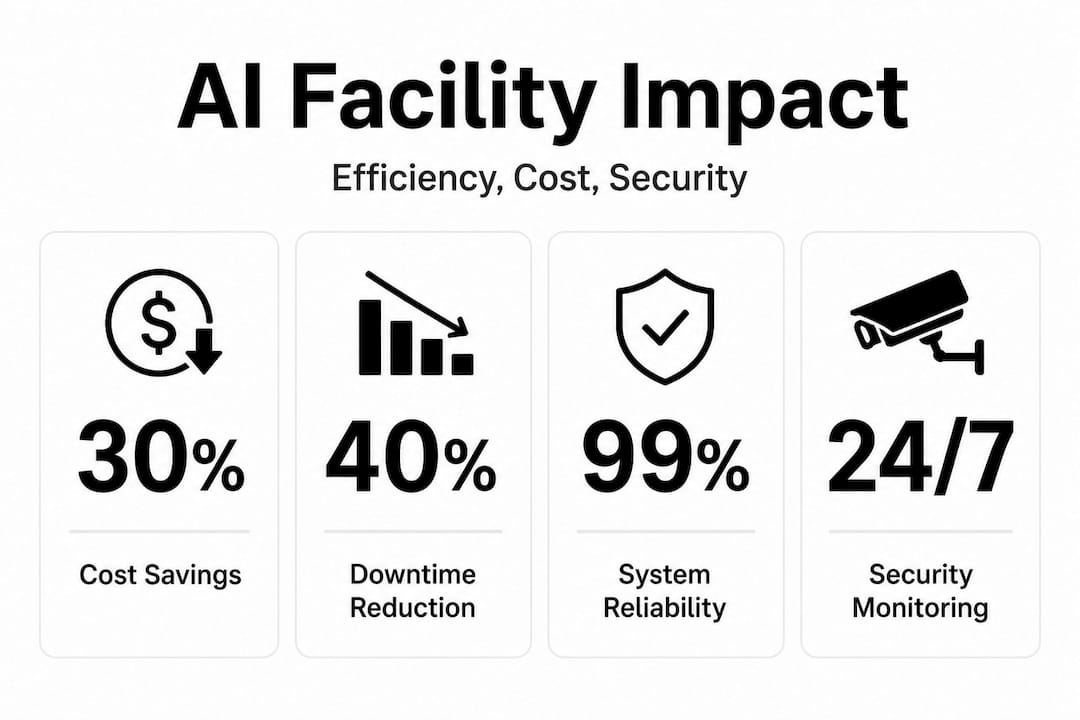
The short answer is: significantly more than most budget proposals assume. The longer answer requires looking at specific impact areas, because the ROI is not uniform across all facility types or functions.
| Benefit area | Typical improvement range | Example context |
|---|---|---|
| Maintenance cost reduction | 25% to 30% | Universities, hospitals |
| Energy savings | 20% to 44% | Commercial, industrial |
| Downtime reduction | 30% to 45% | Manufacturing, healthcare |
| Predictive maintenance savings | Up to 67% | Retail chains, large campuses |
| ROI multiple | 2.5x to 160% | Case study range |
These empirical benchmarks come from peer-reviewed facility management research, not vendor white papers. A hospital network that implemented AI-driven predictive maintenance reduced unplanned equipment failures by 38% within the first year, translating directly to fewer patient disruptions and lower emergency repair costs. A retail chain operating dozens of locations used AI to centralize HVAC management and cut energy spend by 29% across its portfolio.
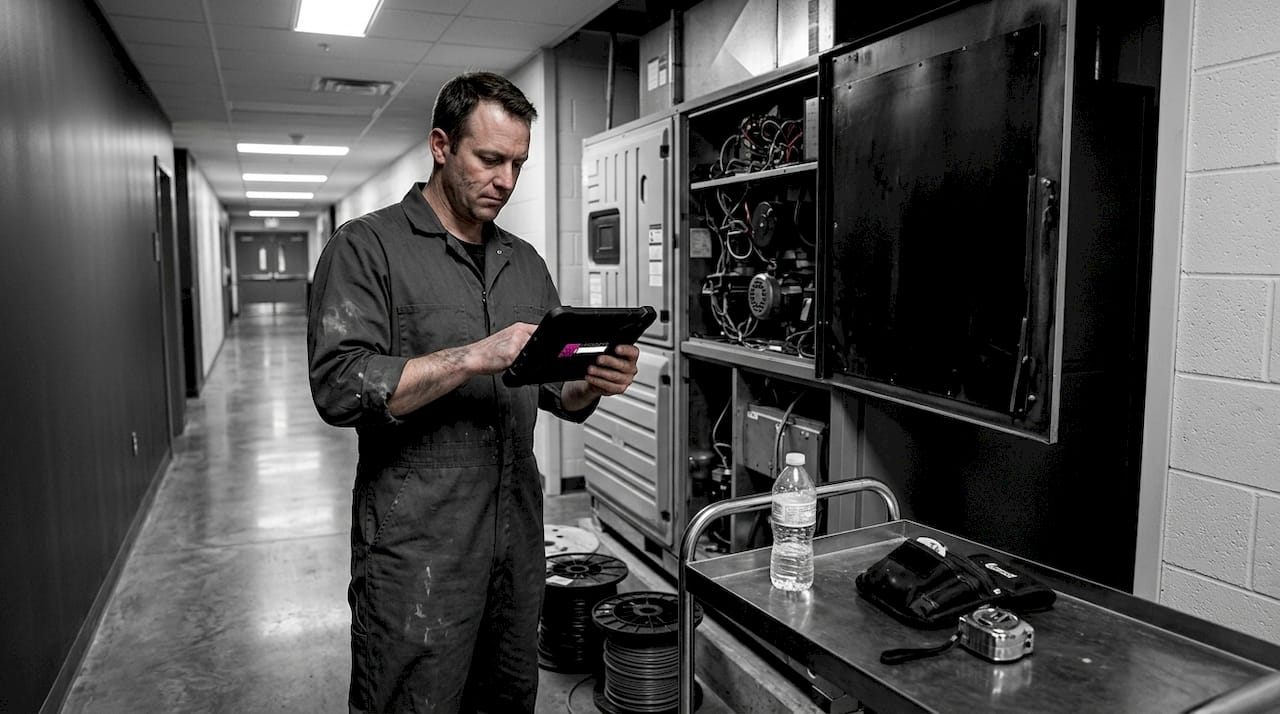
The advantages of sensing solutions are especially pronounced in multi-building portfolios where manual monitoring is simply not scalable. A single operations manager cannot realistically track the performance of 200 assets across 15 buildings. AI can, and it flags only the exceptions that require human attention, a model sometimes called exception-based monitoring. Exploring the advantages of sensing solutions at the infrastructure level reveals how layered sensor data creates the foundation for all of these gains.
How to capture benefits quickly, in sequence:
- Audit your existing data sources. Identify what your CMMS, BMS (building management system), and IoT devices are already generating. You likely have more usable data than you realize.
- Prioritize the highest-cost pain point. Energy management and unplanned maintenance are the most common high-return starting points.
- Deploy a scoped pilot. Choose one building or one asset class. Set measurable baselines before go-live.
- Track leading indicators, not just cost. Monitor equipment health scores, alert accuracy, and response time alongside dollar savings.
- Scale with evidence. Use pilot results to make the internal business case for broader deployment. Quantified outcomes accelerate budget approvals.
The facilities that achieve the highest ROI are not necessarily the ones with the largest budgets. They are the ones that enter implementation with clear metrics, realistic timelines, and leadership alignment across operations and finance.
Challenges and critical success factors
Understanding the benefits, we have to acknowledge that results are not guaranteed. Success depends on handling some crucial, often-overlooked challenges.
The most sobering statistic in AI adoption for facilities is this: 94% of AI projects fail without data readiness, primarily because of data quality and integration issues, high implementation costs, and skill gaps within operations teams. This is not a reason to avoid AI. It is a reason to prepare for it correctly.
Data quality is the foundational issue. AI models are only as reliable as the data they are trained on. If your CMMS has inconsistent asset tagging, or your sensors have not been calibrated in 18 months, the model will produce unreliable outputs. Garbage in, garbage out is not a cliché in this context. It is a predictive failure mode.
System integration is the second major barrier. Most facilities run a mix of legacy building management systems, newer IoT platforms, and standalone CMMS tools that were never designed to communicate with each other. AI cannot deliver facility-wide insights without data from all of these systems flowing into a unified layer. This integration work is often underestimated in both time and cost.
Successful vs. failed AI implementation strategies:
| Factor | Successful implementations | Failed implementations |
|---|---|---|
| Data preparation | Audited and cleaned before deployment | Assumed existing data was sufficient |
| Integration scope | Phased, starting with highest-value systems | Attempted full integration immediately |
| Staff involvement | Operators trained and involved from day one | Technology deployed without team buy-in |
| Model maintenance | Scheduled retraining and performance reviews | Set-and-forget approach after launch |
| Human oversight | Maintained for all high-stakes decisions | Fully automated without review process |
The human-in-the-loop principle deserves specific attention. AI augments human decision-making; it does not replace it. This is especially true for securing facilities with sensors in environments where a missed alert or a false negative has serious consequences. Security directors who remove human review from AI-flagged alerts to save time often discover that the cost of a single missed incident far exceeds the savings from reduced review hours.
Key actions that determine whether implementation succeeds:
- Conduct a data readiness assessment before signing any vendor contract
- Define clear escalation paths for AI-generated alerts that require human judgment
- Allocate dedicated time for operations staff to learn and interact with the new system
- Set a 90-day post-launch model review to catch early drift or inaccurate predictions
- Establish a feedback loop where technicians can flag incorrect AI recommendations
"The technology is ready. The question is whether your data, your team, and your processes are ready to support it."
Pro Tip: Assign a dedicated AI operations lead during the first six months of deployment. This does not need to be a data scientist. It needs to be someone with deep knowledge of your facility systems who can bridge the gap between the AI outputs and the maintenance team's daily workflow.
From pilot to scale: Best practices for facility leaders
With a clear view of common pitfalls, the path forward is to adopt best practices that confident leaders now use to drive real outcomes from AI.
Scaling AI across a facility or portfolio is not a technology problem. It is a change management problem with a technology backbone. The organizations that succeed treat the pilot phase as a learning environment, not just a proof of concept.
Implementation requires data integration from CMMS, IoT, and BMS systems, structured pilot programs with defined success criteria, ongoing staff training, and model retraining for unique building conditions, whether those are extreme climate variations, specialized industrial assets, or atypical occupancy patterns.
Best practices for moving from pilot to full-scale deployment:
- Define success before you start. Identify three to five KPIs that the pilot will be measured against. Common choices include mean time between failures, energy cost per square foot, and alert response time.
- Integrate data sources incrementally. Begin with your primary CMMS and one IoT data stream. Add additional sources after the first integration is stable and validated.
- Train in context, not in classrooms. The most effective staff training happens on the live system, with real data, alongside experienced operators who can explain what the AI is flagging and why it matters.
- Plan for model retraining from day one. Buildings change. Occupancy patterns shift. New equipment is added. Set a quarterly review cycle to assess model accuracy and retrain when performance drifts.
- Build an internal champion network. Identify two or three early adopters on your operations team who are enthusiastic about the technology. They become peer advocates who accelerate adoption across the broader team.
- Use real-time sensing applications to close the feedback loop. Sensor data that flows directly into AI models creates a continuous improvement cycle, catching new anomalies faster as the system learns from field outcomes.
Scaling works best when leadership communicates clearly that AI is a tool to make the team more effective, not a mechanism to reduce headcount. That framing builds trust, accelerates adoption, and ultimately produces better outcomes.
Pro Tip: Schedule a joint review session between your AI vendor, your operations lead, and your finance team at the 90-day mark of every new deployment. Align on what the data shows, what adjustments are needed, and what the next phase should look like.
AI's real promise for facility management: More human, not less
After reviewing the nuts and bolts of AI adoption, most guides end with a technology checklist or a vendor pitch. We want to offer a perspective that is less common but arguably more important: the real value of AI in facility management is that it makes your people more strategically valuable, not less relevant.
The narrative that AI will eventually replace facility operations staff misunderstands both the technology and the work. AI excels in pattern recognition but falters in novel or unique scenarios, such as rare equipment faults, unusual climate conditions, or security situations that fall outside its training data. Human oversight is not just a safety net. It is a core functional requirement for any facility where the cost of error is high.
What AI actually unlocks is a shift in how your team spends its time. When technicians are no longer reactive, chasing down unexpected failures or manually reviewing hours of security footage, they can focus on the work that machines genuinely cannot do: building relationships with occupants, making nuanced judgment calls on capital investments, and designing operational workflows that improve over time. That is a significant upgrade to the role of facility management professionals, not a threat to it.
The organizations that extract the most value from AI are the ones that invest equally in people and technology. They retrain staff, involve operators in AI configuration, and create feedback loops where human insight shapes model behavior. They also maintain clear human review processes for optimizing security workflows, particularly in environments where false negatives carry real operational risk.
The facility leaders who will define the next decade of the industry are not the ones who automated everything they could. They are the ones who used AI to free their teams to do the things automation will never fully master.
Explore AI-driven solutions tailored for your facility
For managers ready to move from insight to action, the next step is finding solutions that align with the operational realities of your specific facility type, asset base, and security requirements.

BeyondSensor provides specialized sensing technologies and AI-integrated tools designed for facility managers and security directors who need precision, reliability, and scalability. Whether you are evaluating solutions for the first time or looking to expand an existing deployment, the AI management tools on our platform are built to align with evidence-backed implementation practices. Security agencies can explore purpose-built configurations through our AI for security agencies portal, while operators managing multi-site or end-user environments will find resources tailored to their scale at AI for end users. Our team operates across Singapore, Malaysia, and the Philippines, delivering localized validation and deployment support where it matters most.
Frequently asked questions
What is the main advantage of AI in facility management?
AI delivers major savings by reducing energy use, cutting maintenance costs, and minimizing operational downtime through real-time analytics and automation. Research confirms ROI multiples of 2.5x or more in hospital, university, and retail deployments.
Can AI fully automate facility management?
No. Experts confirm that AI excels in pattern recognition but requires human oversight for novel scenarios, especially in security and critical facility operations.
What are the most common obstacles to successful AI adoption?
Poor data quality, system integration gaps, and inadequate staff training are the primary reasons AI projects fail. Industry data shows that 94% of AI projects fail without proper data readiness in place.
How do facilities start implementing AI?
Begin with pilot programs that integrate CMMS and IoT data, set clear baseline metrics, train your staff on live systems, and plan for model retraining before scaling across your full portfolio.
Recommended
- Top intelligent sensing technologies to boost facility security | News | BeyondSensor
- How to Secure Facilities with Advanced Sensor Technology | News | BeyondSensor
- Optimize physical security workflows with advanced sensors | News | BeyondSensor
- Defining operational efficiency in security: insights & best practices | News | BeyondSensor
Read More Articles
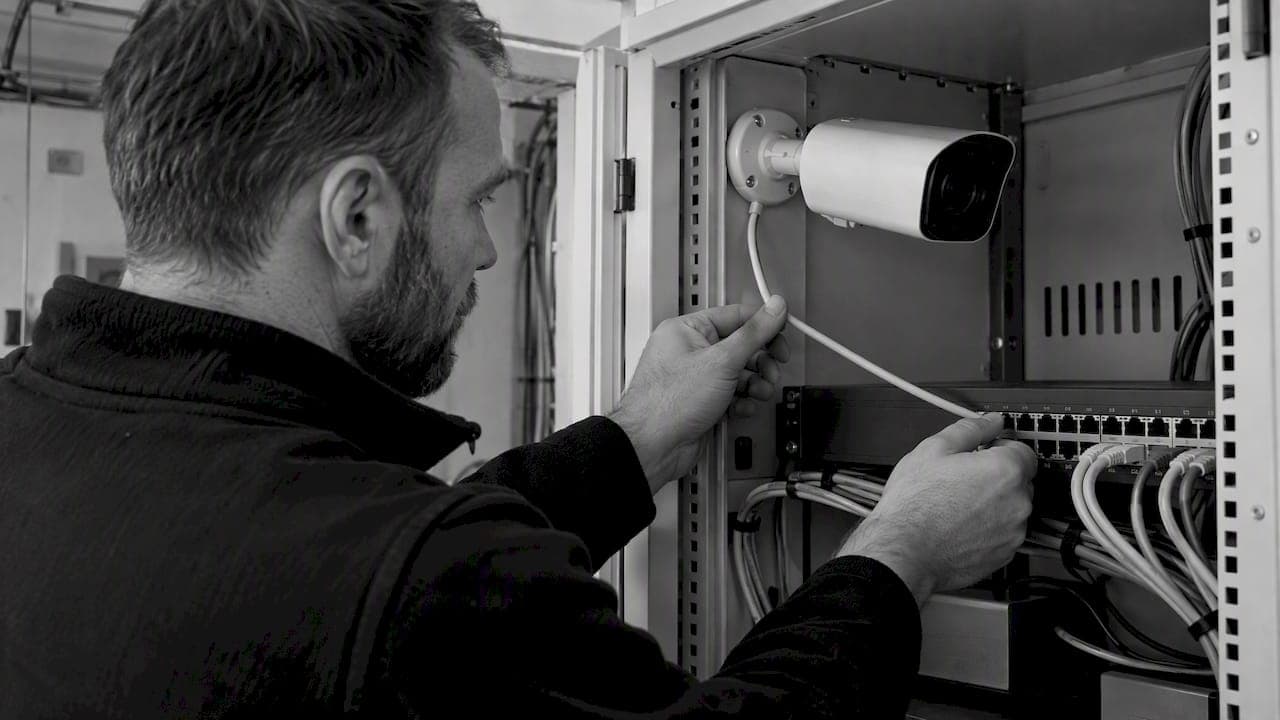
RTSP Security Risks: Integrators Must Block Exposed Ports 554 and 8554
See how integrators can reduce RTSP security risks: close exposed ports 554 and 8554, secure camera access, and verify each deployment with practical checks.
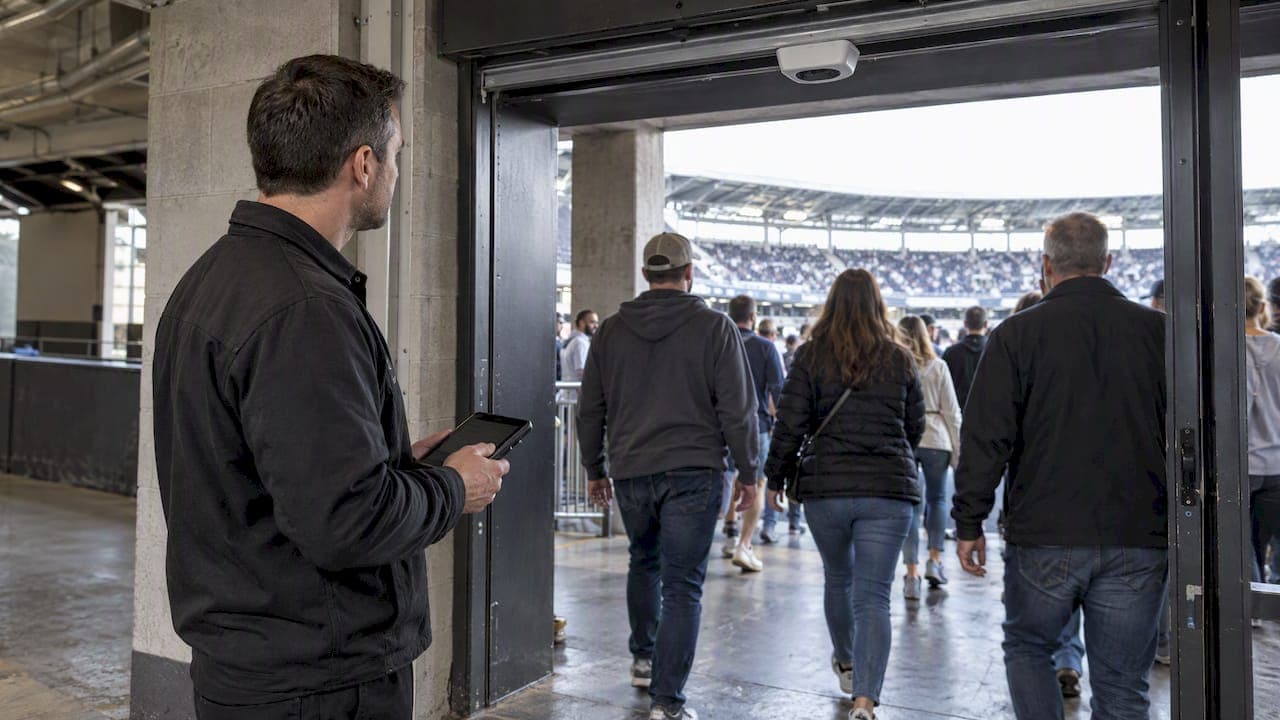
Require MAEpp and X Accuracy Before You Buy People Counting Systems
Verify people counting accuracy by demanding MAEpp, X Accuracy, and directional-bias reports. Validate on-site with at least 100 events per direction...
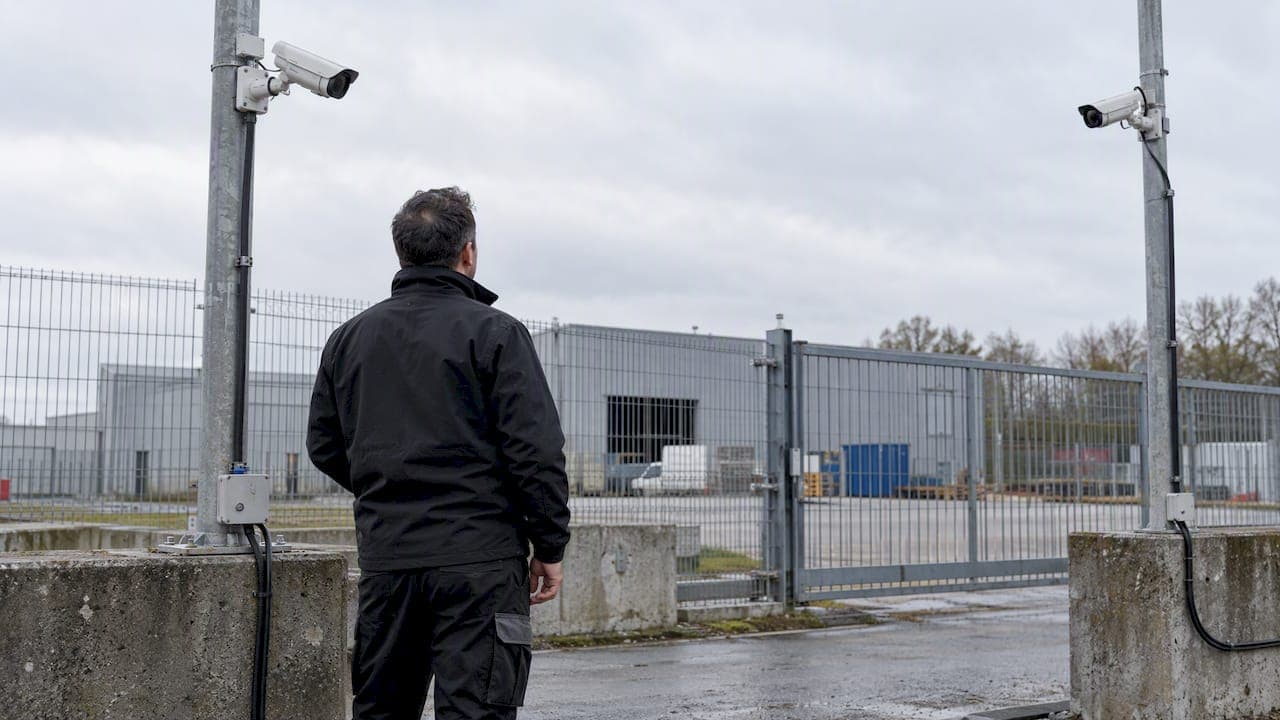
30–90 Day Pilot Validates Redundant Camera Networks for Engineers
Standards led, practical steps for engineers to deploy redundant camera networks: MRP, dual homing, and aggregation patterns, commissioning checks, and...
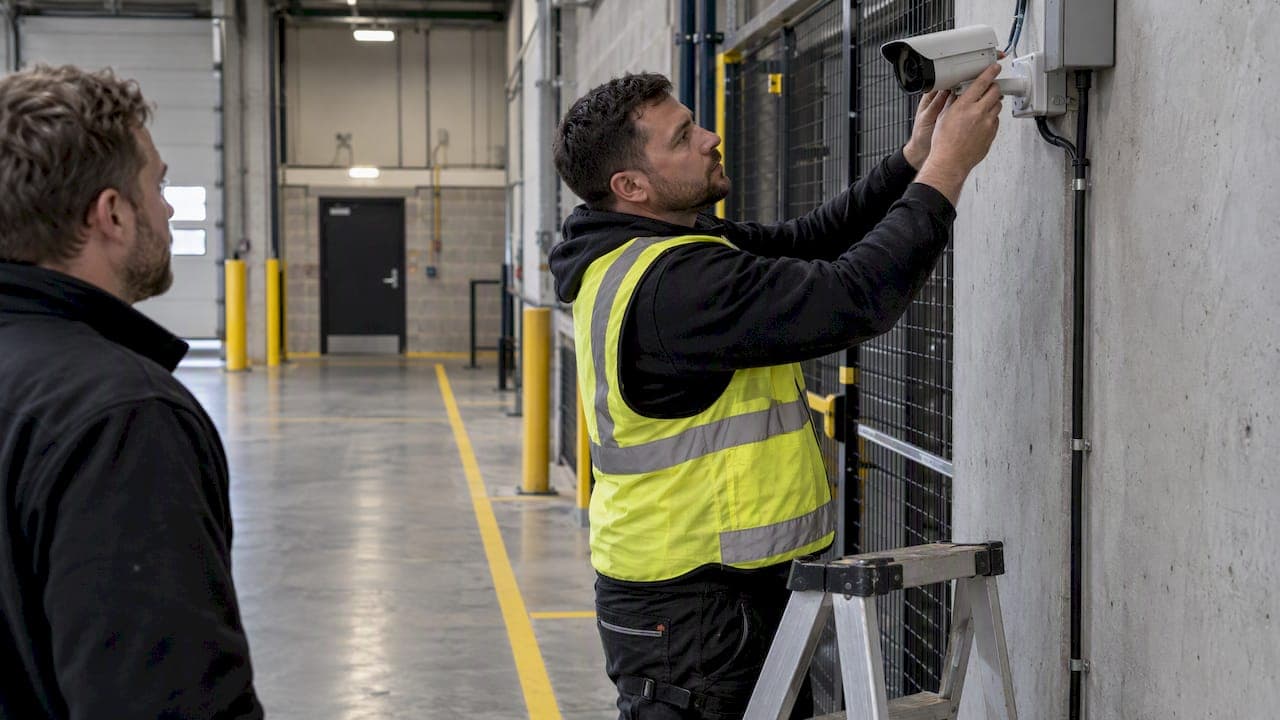
30 Day Pilot Proves Video Analytics Accuracy for Security Teams
Validate video analytics accuracy with scenario tests, camera tuning, transfer learning and a 30 day edge first pilot for security teams.
Let's Build YourSecurity Ecosystem.
Whether you're a System Integrator, Solution Provider, or an End-User looking for trusted advisory, our team is ready to help you navigate the BeyondSensor landscape.
Direct Advisory
Connect with our regional experts for tailored solutioning.