
Discover why edge computing in security is crucial in 2026. Learn how real-time processing can enhance your security strategy significantly.

Why Edge Computing in Security Matters in 2026

TL;DR:
- Edge computing processes and analyzes data near its source, enabling faster threat detection and reducing data exposure. It offers superior DDoS resilience, autonomous operation, and improved detection accuracy compared to centralized security models. Building a zero trust architecture with hardware protections and AI integration is essential for effective edge security.
Edge computing in security is defined as the practice of processing, analyzing, and protecting data at or near the point of generation rather than routing it to a centralized data center. This architecture gives security teams a measurable advantage: sub-20ms latency processing across distributed nodes, enabling real-time threat detection that centralized models cannot match. Technologies like Edge AI and federated learning, referenced by organizations including CISA and Tencent Cloud, are now central to how enterprise security teams think about why edge computing in security is not optional. For IT professionals and security decision-makers, understanding this shift is the foundation of every architecture decision you will make in 2026 and beyond.
How does edge computing improve security over centralized models?
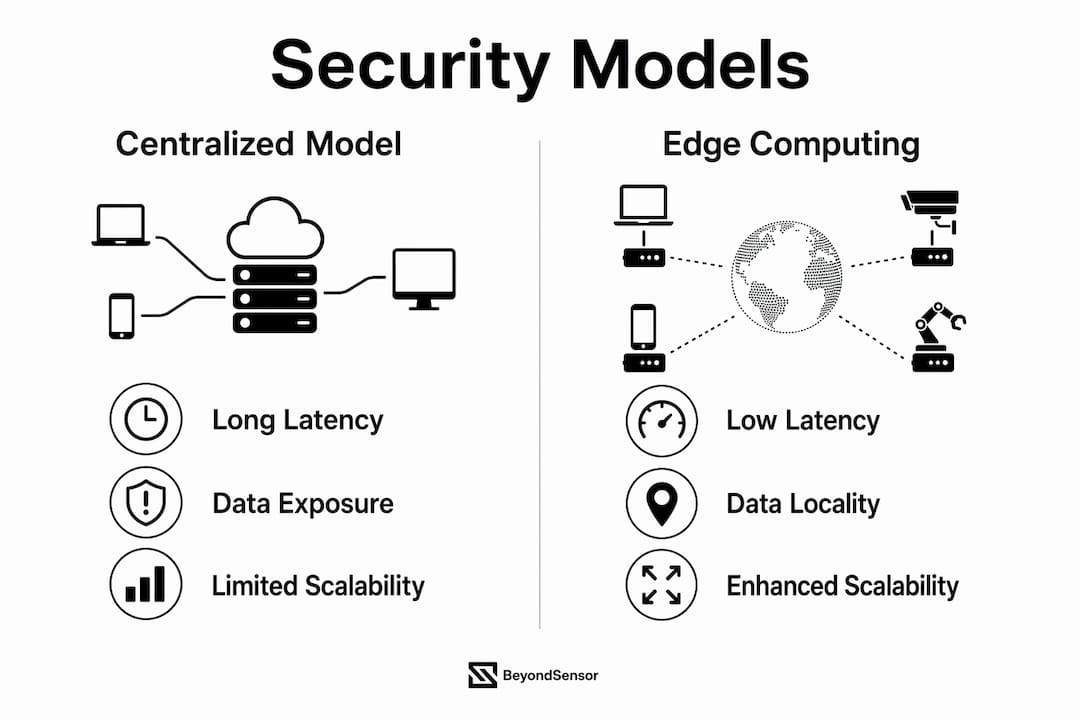
The core argument for edge computing in security is speed combined with reduced exposure. When data never leaves the local network perimeter to reach a cloud data center, it cannot be intercepted in transit. That single architectural fact eliminates an entire class of man-in-the-middle and data exfiltration attacks that plague centralized models.
The performance numbers are concrete. Edge security nodes leverage more than 3,200 global points of presence with aggregate capacity exceeding 400 Tbps. That scale allows terabit-level volumetric DDoS attacks to be absorbed and mitigated before they ever reach your core infrastructure. Centralized security stacks simply cannot absorb that volume without significant degradation.

The architectural difference matters as much as the performance gap. Traditional centralized security operates on a fortress perimeter model: protect the boundary, trust what is inside. The perimeter defense model is obsolete in distributed environments where data is generated across thousands of IoT sensors, OT devices, and remote endpoints. Edge computing replaces that single wall with distributed enforcement at every node.
Key advantages of edge security over centralized architectures:
- Reduced attack surface: Sensitive data stays local, cutting exposure during transmission.
- Faster response: Threat detection and enforcement happen in milliseconds at the source.
- DDoS resilience: Distributed nodes absorb volumetric attacks without centralizing the load.
- AI at the edge: Machine learning models run locally, enabling adaptive detection without cloud round-trips.
- Operational continuity: Local processing keeps security functions active even when WAN links are degraded.
What are the unique security challenges in edge environments?
Edge computing introduces security problems that do not exist in controlled data center environments. Recognizing them early is what separates a resilient architecture from a vulnerable one.
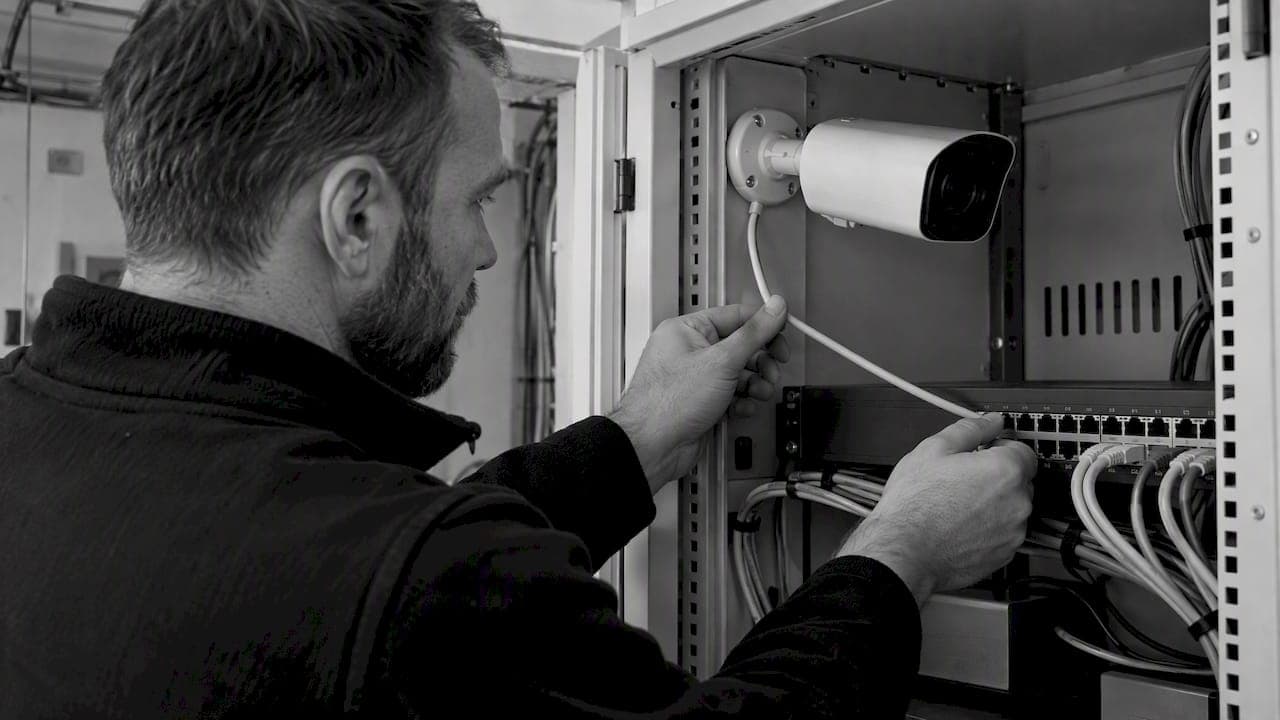
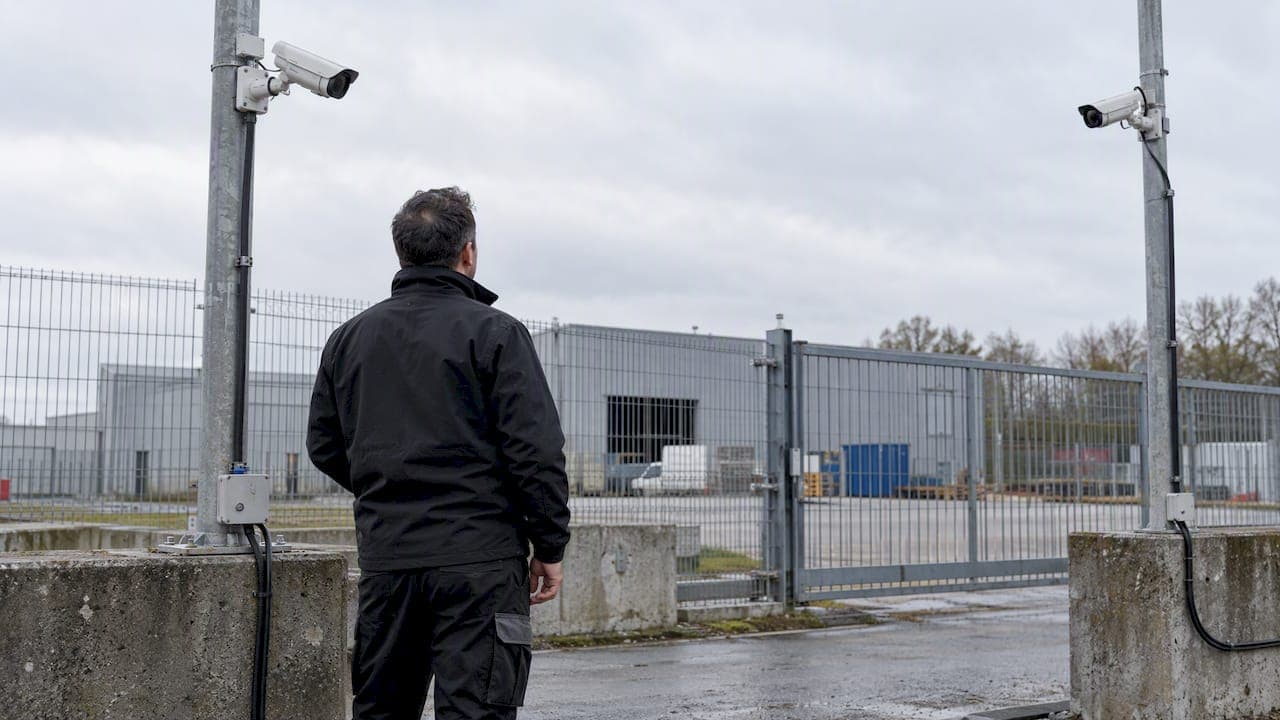
Physical exposure is the most underappreciated risk. Unlike a locked server room, edge nodes are often deployed in public spaces, remote facilities, or industrial floors. Hardware-based protection like TPM 2.0 or secure enclaves is required to prevent physical tampering that software defenses cannot stop. An attacker with physical access to an unprotected edge device can bypass the operating system entirely.
Device heterogeneity compounds the problem. A single enterprise edge deployment may include routers, IP cameras, industrial controllers, and environmental sensors from dozens of manufacturers. Each device runs different firmware, has different update cycles, and presents a different attack surface. Applying uniform security policy across that mix is operationally difficult.
Asymmetric visibility is the threat model problem that most security teams underestimate. An attacker who compromises one edge node gains full internal visibility into that segment, while defenders see only limited telemetry. This asymmetry demands preventive controls at every node rather than relying on centralized detection to catch lateral movement after the fact.
Intermittent connectivity creates a fourth challenge. Edge environments break the assumption of stable, trusted network connections. Security architectures must function autonomously during outages, not freeze or fail open.
Pro Tip: Deploy zero trust architecture at every edge node from day one. Cryptographic identity verification of every device and connection eliminates the implicit trust assumptions that attackers exploit in distributed environments.
What are the practical benefits of edge computing for security?
The benefits of edge computing for security are measurable across detection accuracy, compliance, and operational resilience. These are not theoretical gains. Research published in Discover Computing in May 2026 demonstrates this directly.
The CyberFedEdgeAI framework, a federated edge intelligence system, achieved 94.2% and 92.4% detection accuracy on benchmark IoT datasets while outperforming centralized baselines. Federated learning means the model trains across distributed nodes without raw data ever leaving each device. Detection accuracy improves, and data exposure drops simultaneously.
Practical security applications where edge computing delivers measurable gains:
- Real-time intrusion detection: AI models embedded at edge gateways flag anomalous behavior in milliseconds, before alerts reach a SOC analyst.
- Autonomous OT security: Industrial control systems operate in air-gapped or low-connectivity environments where cloud-dependent security tools fail. Edge AI fills that gap.
- Video analytics at the source: Physical security cameras process footage locally, reducing bandwidth and preventing raw video from traversing unsecured networks.
- Federated threat intelligence: Nodes share threat signatures without sharing raw data, improving collective detection without centralizing sensitive information.
- DDoS absorption: Distributed edge nodes absorb volumetric attacks at the network perimeter, protecting core infrastructure from degradation.
| Security Capability | Centralized Model | Edge Computing Model |
|---|---|---|
| Threat detection latency | Seconds to minutes | Under 20ms |
| Data exposure in transit | High | Minimal |
| DDoS resilience | Limited by central capacity | Distributed absorption |
| Offline operation | Fails without connectivity | Autonomous local policy |
| AI detection accuracy | Dependent on data centralization | 92%+ with federated learning |
The role of edge analytics in physical security is expanding rapidly. Organizations deploying sensor-based security infrastructure are finding that processing at the source is not just faster. It is fundamentally more defensible.
How to build a strong edge security strategy in 2026
A strong edge security strategy starts with architecture, not tools. The decisions you make at the design stage determine whether your edge deployment is defensible or fragile.

Adopt zero trust as the default. Every device, every connection, and every data flow must be authenticated cryptographically. Traditional perimeter assumptions collapse at the edge. Mutual authentication and frequent re-verification are not optional additions. They are the foundation.
Anchor security in hardware. TPM 2.0 chips and secure enclaves prevent physical tampering from bypassing software controls. This matters most for devices deployed in publicly accessible locations, where an attacker with a screwdriver represents a real threat vector.
Cache policies locally. Edge gateways must maintain local decision-making capacity and synchronize logs only when connectivity is restored. A security system that fails open during a network outage is not a security system. Design for autonomous operation as the default state, not the exception.
Manage device lifecycle aggressively. CISA identifies end-of-support edge devices as high-risk attack vectors. EOS routers, firewalls, and VPN gateways are actively exploited for network persistence. Maintain a hardware registry, track support timelines, and replace EOS devices before they become liabilities.
Integrate AI for continuous defense. The Edge AI Security Mesh concept describes AI-driven enforcement operating autonomously at each node while central cloud infrastructure governs policy. This model scales detection without scaling analyst headcount.
Pro Tip: Build your threat detection AI layer into the edge architecture from the start. Retrofitting AI detection onto an existing edge deployment costs significantly more and introduces integration gaps that attackers can exploit.
How does edge security align with regulatory compliance?
Regulatory pressure is accelerating edge security adoption. PCI DSS 4.0, DORA, and NIS2 all impose requirements that are difficult to meet with traditional centralized architectures and much easier to satisfy with integrated edge platforms.
The core compliance advantage of edge computing is data locality. The EU Data Act and similar data sovereignty regulations require that certain categories of data remain within specific geographic boundaries. Edge computing enforces that requirement architecturally. Data processed at a local node never crosses a border unless you explicitly configure it to do so.
Integrated edge platforms provide audit-ready documentation and multi-regulation compliance from a single architecture. That consolidation matters. Security teams managing multi-vendor stacks spend significant time reconciling logs and documentation across systems. A unified edge platform generates consistent audit trails automatically.
For security integrators working across Southeast Asia, where Beyondsensor operates across Singapore, Malaysia, and the Philippines, local data sovereignty requirements vary by jurisdiction. Edge computing gives you the architectural flexibility to meet each country's requirements without redesigning your core infrastructure.
| Regulation | Key Requirement | Edge Computing Advantage |
|---|---|---|
| PCI DSS 4.0 | Continuous monitoring and access control | Local enforcement and real-time logging |
| DORA | ICT resilience and incident reporting | Autonomous operation during outages |
| NIS2 | Risk management for critical infrastructure | Distributed defense reduces single points of failure |
| EU Data Act | Data locality and sovereignty | Processing stays within defined geographic boundaries |
Compliance auditing frameworks are also evolving to account for distributed infrastructure. Security decision-makers who build compliance into their edge architecture now will spend far less time on remediation when new regulations take effect. Explore compliance guidance for security integrators to understand how these requirements map to real deployment decisions.
Key Takeaways
Edge computing in security works because it moves detection, enforcement, and data protection to the source, eliminating transit exposure, reducing latency to under 20ms, and enabling autonomous operation that centralized models cannot deliver.
| Point | Details |
|---|---|
| Speed is the core advantage | Edge processing delivers sub-20ms threat detection, far faster than any centralized architecture. |
| Physical security is non-negotiable | Deploy TPM 2.0 or secure enclaves on every exposed edge node to prevent hardware-level tampering. |
| Zero trust replaces perimeter defense | Cryptographic authentication of every device and connection is the baseline, not an upgrade. |
| Federated AI raises detection accuracy | Frameworks like CyberFedEdgeAI achieve over 92% detection accuracy without centralizing raw data. |
| Compliance is an architectural outcome | Integrated edge platforms simplify PCI DSS 4.0, DORA, and NIS2 compliance through built-in data locality. |
The shift I think most security teams are still missing
Most security teams I talk to are still treating edge computing as a performance upgrade rather than a security architecture change. That framing is the mistake. When you deploy edge nodes and keep your security model centralized, you get the worst of both worlds: distributed attack surface with centralized detection blind spots.
The physical risk is the one that surprises people most. Security professionals who have spent their careers thinking about network threats underestimate what an attacker with physical access to an edge device can accomplish. A TPM chip is not glamorous. It does not show up in a vendor demo. But it is the difference between a tampered device and a trusted one.
Federated learning is the technology I am most confident about for the next three years. The ability to train detection models across distributed nodes without moving raw data is not just a privacy win. It means your detection improves with every deployment you add to the network, without increasing your data exposure. That is a compounding security advantage that centralized models cannot replicate.
My honest advice: stop treating edge security as a compliance checkbox and start treating it as an architectural commitment. The organizations that build zero trust and AI enforcement into their edge infrastructure now will have a detection and resilience advantage that takes competitors years to close.
— Eumir
How Beyondsensor supports your edge security architecture

Beyondsensor builds the sensor-based security infrastructure that edge computing strategies depend on. From high-precision physical security sensors to AI-powered edge analytics platforms, Beyondsensor delivers hardware-software solutions designed for the distributed, compliance-driven environments that IT teams and security integrators operate in across Singapore, Malaysia, and the Philippines. Whether you are designing a new edge security architecture or hardening an existing deployment, Beyondsensor's regional expertise and validated technology stack give you a partner who understands both the technical requirements and the local regulatory context. Explore Beyondsensor's full range of edge security solutions to find the right fit for your infrastructure.
FAQ
What is edge computing security?
Edge computing security is the practice of processing and protecting data at or near the point of generation rather than in a centralized data center. It reduces data exposure in transit and enables real-time threat detection at the network edge.
Why is edge computing better for security than centralized models?
Edge computing reduces latency to under 20ms, limits sensitive data transmission across networks, and enables autonomous operation during outages. Centralized models create single points of failure and cannot absorb terabit-scale DDoS attacks without degradation.
What are the biggest security risks in edge computing environments?
Physical tampering, device heterogeneity, and asymmetric threat visibility are the three primary risks. CISA identifies end-of-support edge devices as active attack vectors, and hardware-level protections like TPM 2.0 are required for physically exposed nodes.
How does zero trust apply to edge computing?
Zero trust at the edge requires cryptographic identity verification for every device and connection, because traditional perimeter assumptions do not hold in distributed, physically exposed environments. Every node must authenticate independently, regardless of network location.
How does edge computing help with regulatory compliance?
Integrated edge platforms enforce data locality architecturally, simplifying compliance with PCI DSS 4.0, DORA, NIS2, and data sovereignty regulations. They generate consistent audit trails automatically, reducing the documentation burden across distributed infrastructure.
Recommended
Read More Articles
RTSP Security Risks: Integrators Must Block Exposed Ports 554 and 8554
See how integrators can reduce RTSP security risks: close exposed ports 554 and 8554, secure camera access, and verify each deployment with practical checks.

Require MAEpp and X Accuracy Before You Buy People Counting Systems
Verify people counting accuracy by demanding MAEpp, X Accuracy, and directional-bias reports. Validate on-site with at least 100 events per direction...
30–90 Day Pilot Validates Redundant Camera Networks for Engineers
Standards led, practical steps for engineers to deploy redundant camera networks: MRP, dual homing, and aggregation patterns, commissioning checks, and...

30 Day Pilot Proves Video Analytics Accuracy for Security Teams
Validate video analytics accuracy with scenario tests, camera tuning, transfer learning and a 30 day edge first pilot for security teams.
Let's Build YourSecurity Ecosystem.
Whether you're a System Integrator, Solution Provider, or an End-User looking for trusted advisory, our team is ready to help you navigate the BeyondSensor landscape.
Direct Advisory
Connect with our regional experts for tailored solutioning.