
Learn when Singapore organizations must redact CCTV footage, what the PDPA requires, and how to preserve clips, document decisions, and build a workable SOP.
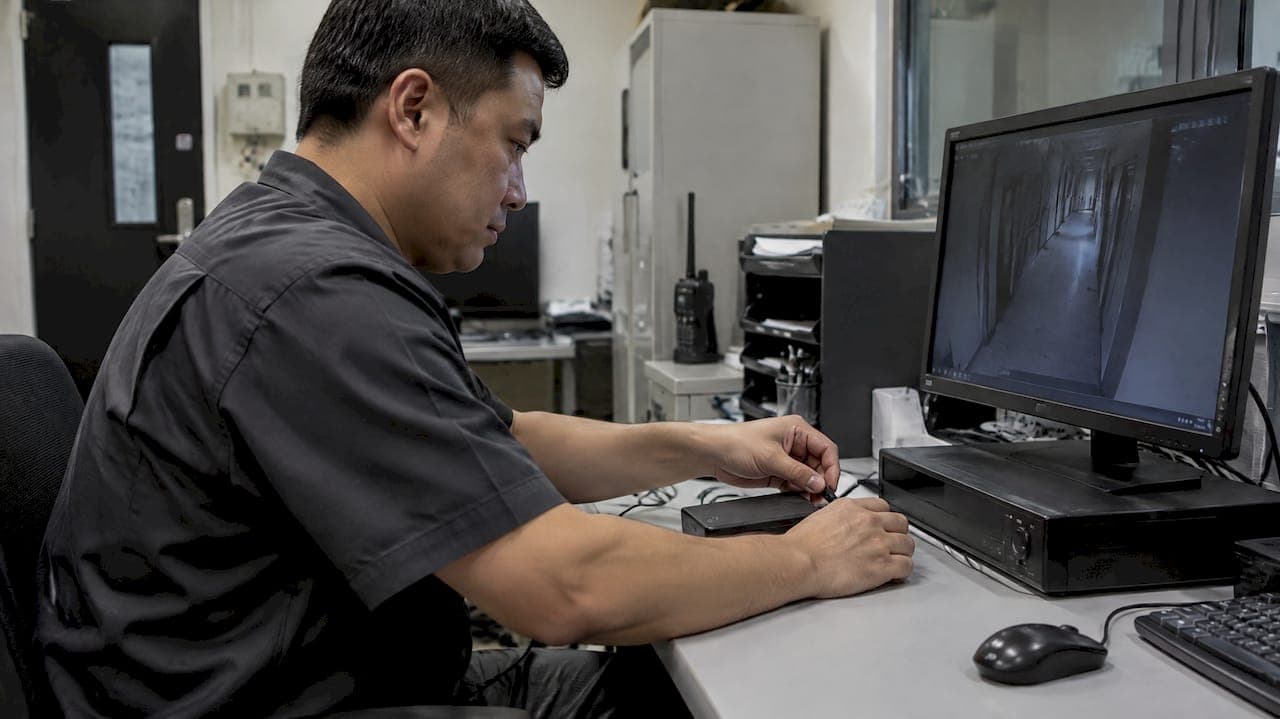
CCTV Video Redaction in Singapore Starts Before Auto Overwrite

Video redaction is the selective masking of faces, plates, screens, or audio in recorded footage so the remaining content can be shared without exposing people who are not part of the request. The single most urgent action when a redaction request lands is to locate the relevant footage and preserve it before automatic overwrite deletes it. Everything else, from choosing a filter to delivering a final clip, depends on getting that first step right.
TL;DR:
- Under Singapore’s PDPA, organizations generally must mask identifiable third parties before disclosing footage, with narrower exceptions for recordings made purely in public areas.
- Stills, supervised viewing, or a tightly cropped extract can meet narrow requests while reducing rendering work and the risk of losing evidential detail.
- Use selective tracking for moving faces or plates, but choose dense pixelation over standard blur when resisting automated attempts to identify people again.
- For audio, use a timecoded transcript to locate every identifiable mention, then mute each point rather than relying on listening to the clip once.
- Render a new irreversible copy, archive the original separately under access controls, and document timecodes, filters, and reviewer approval for later chain of custody checks.
Table of Contents
- When CCTV Footage Needs to Be Redacted
- What the PDPA Requires When You Disclose CCTV Footage
- Redaction Methods and Where Each One Falls Short
- A Practical SOP for Preserving and Delivering Redacted Footage
- Choosing a Redaction Tool: Categories and Selection Criteria
- A Checklist You Can Paste Into Your SOP
- How We Structure Redaction SOPs in the Field
- Why Discipline Beats Improvisation in Redaction Work
- Building Redaction-Ready Surveillance Infrastructure
- FAQ
- Sources
When CCTV Footage Needs to Be Redacted
Redaction requests show up in a handful of recurring scenarios: data subject access requests (SARs) from individuals who appear on camera, evidence sharing with police or lawyers, footage prepared for media or public release, and internal incident reviews that get escalated beyond the security team. Each scenario carries a different disclosure bar, but the underlying task is the same: isolate what the requester is entitled to see and mask what they are not.
The elements most commonly masked include:
- Faces and identifiable features of bystanders or other staff
- License plates and vehicle identifiers
- Private screens, documents, or badges visible in frame
- Audio containing names, account numbers, or other identifiable speech
Full redaction is not always the right tool. A still image, an in-person viewing session, or a tightly cropped extract can satisfy a request with less rendering work and lower risk of losing evidential detail, particularly when the footage window is short and the subject matter is narrow.
What the PDPA Requires When You Disclose CCTV Footage
Organisations handling access requests under Singapore's data protection framework must provide applicants with the personal data in their possession or under their control, unless a specific exception applies, and that includes CCTV footage showing the requester. Where the same frame captures other identifiable people, the PDPC advisory guidelines expect organisations to mask those third parties before disclosure, with narrower exceptions for footage taken purely in public areas.
The same guidance recommends preserving footage as soon as a request is identified and considering lower-friction alternatives, such as stills or supervised viewing, when full video extraction would be disproportionately costly.

A documented PDPC commission decision found an organisation in breach for failing to preserve footage and lacking a written SOP for handling access requests, a reminder that the obligation is operational, not just legal theory. Preservation and masking decisions should be documented as they happen, including who approved the redaction scope and why. Where access is refused, retain the footage for a reasonable period after refusal so the decision can be reviewed if challenged.
Redaction Methods and Where Each One Falls Short
Two broad approaches cover most CCTV redaction work. Global redaction masks an entire segment or region for the duration of a clip, which is fast to apply but coarse: it can obscure evidential detail that was never meant to be hidden. Selective redaction tracks a specific face, plate, or object through the frame and masks only that element, preserving everything else, though it depends on reliable tracking and takes longer per minute of footage.
Within selective redaction, the filter choice matters:
- Heavy pixelation or a dense mosaic resists most automated re-identification attempts
- Standard blur is easier to apply but less resistant to sophisticated reversal
- Solid shape masks (boxes, ovals) are simple and fully opaque but visually blunt
- Face-swap preserves a natural viewing experience but complicates later verification of who was actually recorded
Audio redaction deserves the same discipline as video: work from a timecoded transcript so every identifiable mention is located and muted at the exact point it occurs, rather than relying on a listen-through.
Pro Tip: Render redacted footage as a new, irreversible file and keep the original untouched in a separate, access-controlled archive.
A Practical SOP for Preserving and Delivering Redacted Footage
A repeatable sequence keeps redaction requests from becoming ad hoc fire drills:
- Stop automatic overwrite on the relevant camera or recorder and secure admin-level access.
- Record metadata: camera ID, timecode range, codec, and frame rate.
- Locate and narrow the clip to the minimum window needed to answer the request.
- Decide the delivery format: full video, stills, or in-person viewing.
- Apply redaction to the working copy, never the original.
- Render the output irreversibly, with filters baked into the file.
- Have a second reviewer QA the rendered clip against the request scope.
- Document timecodes, filters used, and reviewer sign-off.
- Deliver the file and log any recovery fee charged.
Pro Tip: Export a checksum alongside both the original and the redacted copy so you can prove neither file was altered after the fact.
Keeping the original and working copies physically and logically separate protects the chain of custody if the footage is ever challenged in a later dispute or complaint.
Choosing a Redaction Tool: Categories and Selection Criteria
Redaction tools fall into four broad categories: editors built into the video management system (VMS), plug-ins that extend an existing VMS, standalone redaction software running on desktop or as SaaS, and managed redaction services that handle the work for you.
Whichever category you evaluate, the same checklist applies:
- Does the export render redaction irreversibly, with no way to recover the original frame?
- Does object tracking hold up on moving subjects without manual correction?
- Does the tool keep an audit log of filters, timecodes, and reviewer actions?
- Can it work offline for chain-of-custody-sensitive material, as some standalone redaction apps already do?
- Does it preserve export fidelity (frame rate, container format) for evidential use?
- What is the realistic throughput for high-volume request periods?
- What access controls govern who can run or approve a redaction job?
Managed services tend to fit better when SAR volume is high, internal capacity is thin, or the footage carries legal and evidential complexity that justifies a specialist's involvement. In-house tools make more sense for steady, lower-volume request flow where your own team already owns the SOP.
A Checklist You Can Paste Into Your SOP
- Preserve the footage immediately and stop overwrite.
- Capture metadata: camera, timecode, codec, frame rate.
- Notify your DPO or security lead that a request is active.
- Choose redaction scope and delivery format.
- Run a short test render before processing the full clip.
- Record filters used and reviewer initials.
- Export with a container and frame rate matching the original.
- Archive the original copy separately from the redacted deliverable.
- Log any fee charged and all communications with the requester.
- Update your retention schedule to reflect the case.
How We Structure Redaction SOPs in the Field
Our field notes on CCTV data access cases point to one recurring weakness: SOPs that name a process but not a person. We recommend assigning distinct roles for who preserves footage, who exports and redacts, and who signs off before delivery, so no single step depends on memory. On the technical side, preserve original codecs and metadata before any editing begins, test your irreversible rendering step on a throwaway clip first, and avoid consumer messaging apps for transferring sensitive footage between reviewers. Our guidance on retention windows and secure camera networking practices covers the preservation side of this workflow in more depth.
Why Discipline Beats Improvisation in Redaction Work
The organizations that get burned on CCTV disclosure rarely fail because they picked the wrong filter. They fail because nobody preserved the footage before it overwrote itself, or because the redaction scope was decided verbally and nobody wrote it down. A documented SOP, followed the same way every time, protects both the requester's privacy and the organization's ability to prove it did the right thing. Treat preservation as the first and non-negotiable step, not an afterthought squeezed in after someone notices the clock is running.
— Eumir
Building Redaction-Ready Surveillance Infrastructure
Footage preservation and clean redaction depend on infrastructure that captures the right metadata and admin access in the first place, which is where disciplined system design pays off long before a request ever arrives. Our Solution Integration service builds hardware and software deployments around exactly that requirement, so preservation and export are reliable rather than improvised under deadline pressure.

- BeyondWatch unifies surveillance feeds and workflow logging so footage requests can be traced and actioned from one dashboard: learn more
- BeyondPatrol automates routine monitoring tasks, reducing the manual review load that competes with redaction work: learn more
- Our integration team can validate your current SOP against your camera and storage setup on request
If your team handles recurring access requests and needs infrastructure built around preservation and clean handoffs, reach out to discuss a solution fit for your deployment.
FAQ
What is video redaction in CCTV footage?
Video redaction is the process of masking identifiable elements, such as faces, plates, or audio, in recorded footage before it is shared or disclosed. It allows an organization to meet a disclosure obligation while protecting the privacy of people who are not the subject of the request.
Do I have to blur other people's faces before sharing CCTV with a requester?
Generally yes. PDPC advisory guidance expects organisations to mask third parties' personal data before disclosing footage, with some flexibility for footage captured only in public areas.
How long should I keep CCTV footage after a request comes in?
Preserve the requested footage immediately so it is not overwritten, and if you refuse access, retain it for a reasonable period so the decision can be reviewed. Our retention policy guidance covers how to set a retention schedule that supports this.
What is the best redaction method for moving subjects?
Selective redaction with reliable object tracking handles moving subjects best, since it follows the face or plate through the frame rather than masking a fixed region. Heavy pixelation tends to hold up better against automated re-identification than standard blur.
Can I redact CCTV footage myself, or do I need a service?
In-house tools work well for steady, lower-volume requests where your team already owns the SOP. Managed redaction services tend to fit better for high-volume SAR periods or cases with legal and evidential complexity.
Recommended
Read More Articles
Geofencing Alerts for Site Security: Setup Guide for Singapore
How to design geofencing alerts that flag real security events, cut alert fatigue and stay within PDPA and IPA rules at Singapore sites.
CCTV Operator Training in Singapore: Skills, Courses and Costs
What CCTV operator training involves in Singapore: the PRSF course, fees and subsidies, the 31 December 2026 deadline, and skills for AI-assisted control rooms.
Role-Based Access Control: A Practical Guide for Singapore Security Teams
How role-based access control works, where it breaks (role explosion, stale roles), and how to apply it to both cyber and physical security in Singapore.
Security Site Survey: Facility Teams’ Checklist for Funded Fixes
Assess site risks, turn findings into budgeted action, and use field checklists, reporting templates, and PDPA notes for camera and biometric deployments.
Let's Build YourSecurity Ecosystem.
Whether you're a System Integrator, Solution Provider, or an End-User looking for trusted advisory, our team is ready to help you navigate the BeyondSensor landscape.
Direct Advisory
Connect with our regional experts for tailored solutioning.